We are open 24/7
Why Choose Bird Uganda Safaris
Our Commitment to the Community
Bird Uganda is dedicated to community empowerment through initiatives supporting youth and women birders.


UGANDA BIRDING SAFARIS
See over 1,000 bird species on our Uganda Birding Tours
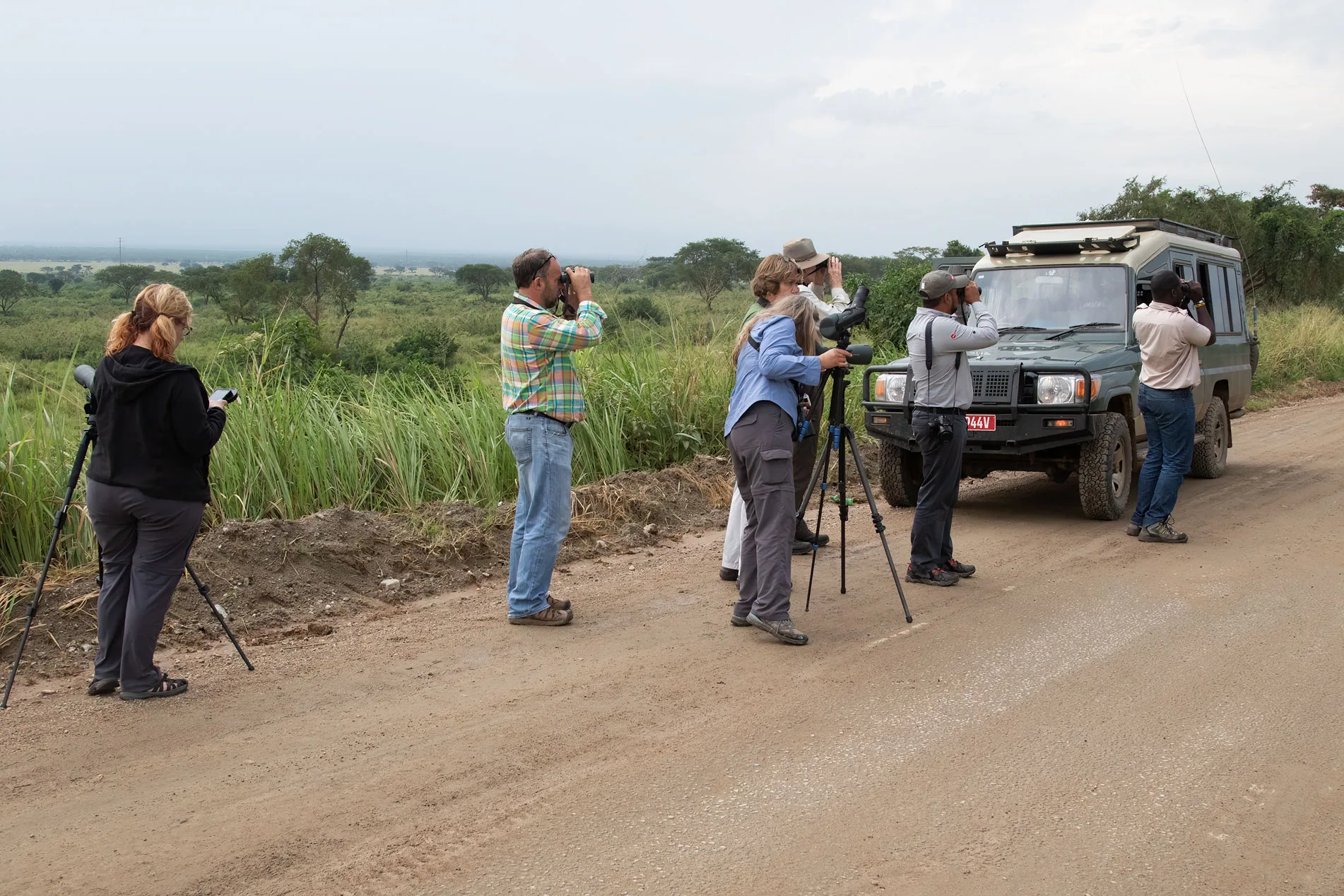
Uganda Birding Safaris 2026–2027
The Ultimate Guide to Bird Watching Tours in Uganda
Uganda is one of the richest birding destinations in the world. With more than 1,080 recorded bird species, the country hosts nearly half of Africa’s bird species and about eleven percent of the world’s total bird population. This extraordinary diversity makes Uganda Birding Safaris in 2026 and 2027 some of the most rewarding wildlife experiences available anywhere in Africa.
Uganda’s strength as a birding destination comes from its unique geography. The country lies where the East African savannah meets the West African rainforest and the Albertine Rift mountain system. Because of this special location, Uganda supports a wide range of habitats within a relatively small area. Travelers can move from open savannah plains to thick tropical forests, from papyrus swamps to mountain slopes, and from freshwater lakes to river valleys within a short time. Each of these environments provides shelter, food, and breeding grounds for different bird species.
The result is a country that offers both high bird numbers and rare species in one well-connected safari circuit. Whether you are a beginner bird watcher, a passionate photographer, or a professional ornithologist, Uganda provides an exciting and fulfilling experience.
Uganda Birding Safaris Packages
The Unique Appeal of Bird Watching in Uganda
Bird watching in Uganda is not just about numbers. It is about variety, accessibility, and the quality of sightings. In many places around the world, birding requires long hours of searching for a few special species. In Uganda, diversity is so high that every morning walk, forest trail, or boat ride can produce dozens of different birds.
The country’s equatorial climate also supports bird activity year-round. Because Uganda does not experience extreme winters, birds remain active and visible in most seasons. Migratory species from Europe and North Africa arrive between November and April, further increasing the total species count. This means that Uganda Birding Safaris in 2026 and 2027 can be planned during almost any month with excellent results.
Another advantage of birding in Uganda is the presence of experienced local bird guides. These guides are highly trained and skilled at identifying birds by sight and sound. In forest environments where birds may hide in thick vegetation, guides rely on calls, movements, and feeding patterns to locate species. Their knowledge greatly improves the success of every safari.
Uganda's Iconic Birding Destinations
Birding in Uganda
Uganda is an amazing place for bird watchers with many great spots to visit. Bwindi Impenetrable Forest National Park is famous for its gorillas and also for its impressive birdlife, including the rare African Green Broadbill. Other excellent birding spots are Mgahinga Gorilla National Park, Rwenzori Mountains National Park, Semliki National Park, Budongo Forest, Murchison Falls National Park, Kidepo Valley National Park, Pian Upe Wildlife Reserve, Bokora and Matheniko reserves, Mount Elgon, Kibale Forest, and Mabamba Wetland. Bwindi is especially noted for having the most bird species unique to the region. With its varied habitats and numerous bird species, Uganda offers a top-notch experience for birdwatchers from around the world
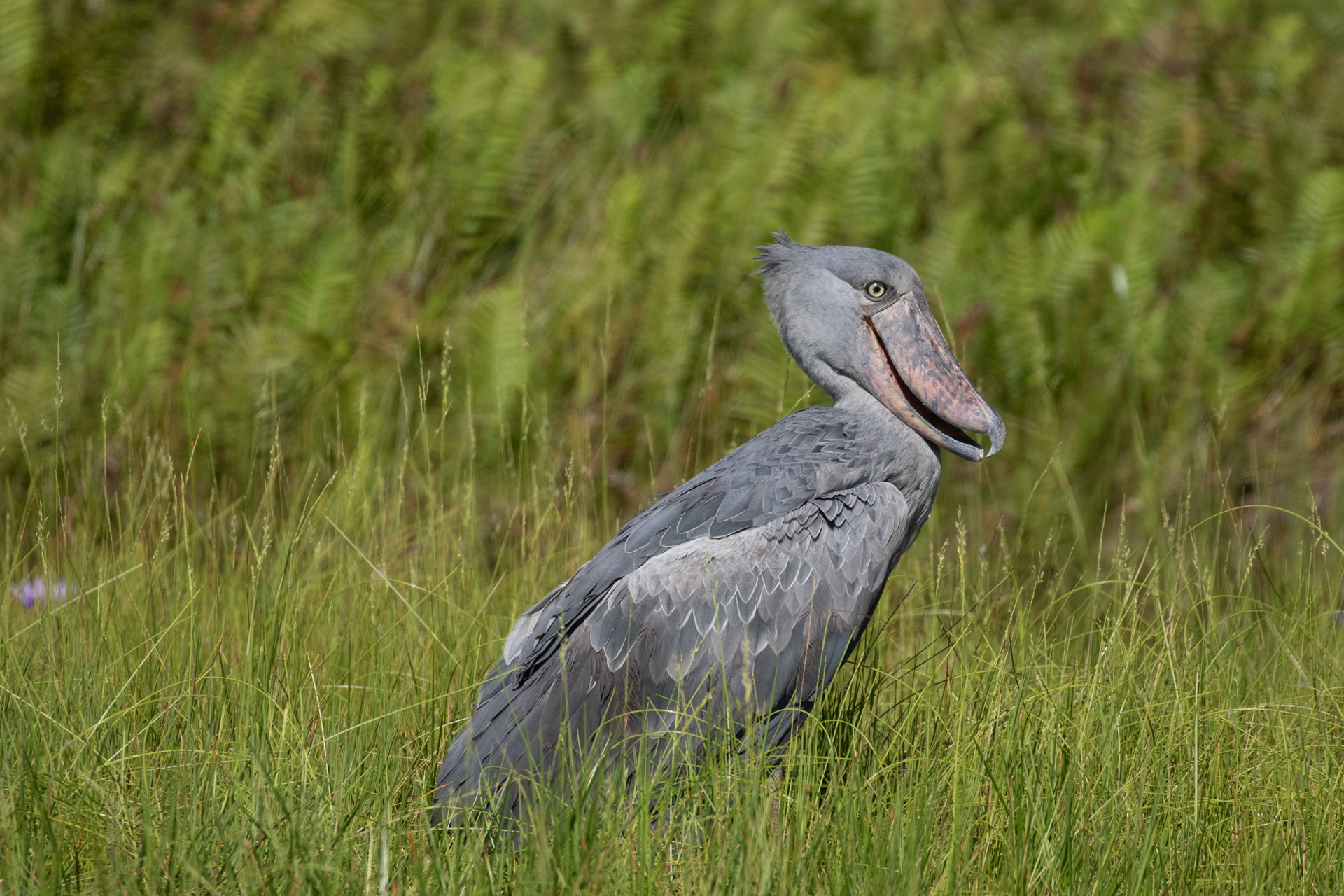
Mabamba Wetland – The Shoebill Experience
One of the most famous birding experiences in Uganda takes place at Mabamba Wetland, located along the shores of Lake Victoria.
This vast papyrus swamp is internationally known as one of the best places in Africa to see the rare and extraordinary Shoebill Stork.
The shoebill is one of the most sought-after birds in the world. Its large size, powerful beak, and prehistoric appearance make it a dream sighting for birders and photographers. Observing this bird in its natural habitat is a truly unforgettable experience.
Birding in Mabamba is conducted by canoe. Visitors glide quietly through narrow papyrus channels, guided by local experts who understand the movements of the shoebill. The silence of the swamp, broken only by bird calls and the gentle sound of paddles in water, creates a peaceful and thrilling atmosphere. In addition to the shoebill, the wetland supports many other water-dependent species, including colorful kingfishers, jacanas walking across floating vegetation, and various marsh birds hidden within papyrus reeds.
Mabamba is often the first stop on a Uganda birding safari because it is located near Entebbe International Airport. It provides an excellent introduction to Uganda’s rich birdlife.
Bwindi Impenetrable National Park – Forest Endemics and Rare Species
Bwindi Impenetrable National Park is widely known for mountain gorillas, but for bird watchers, it is one of Africa’s most important forest birding destinations. The park supports over 350 bird species, including more than twenty Albertine Rift endemics that are rarely found outside this region.
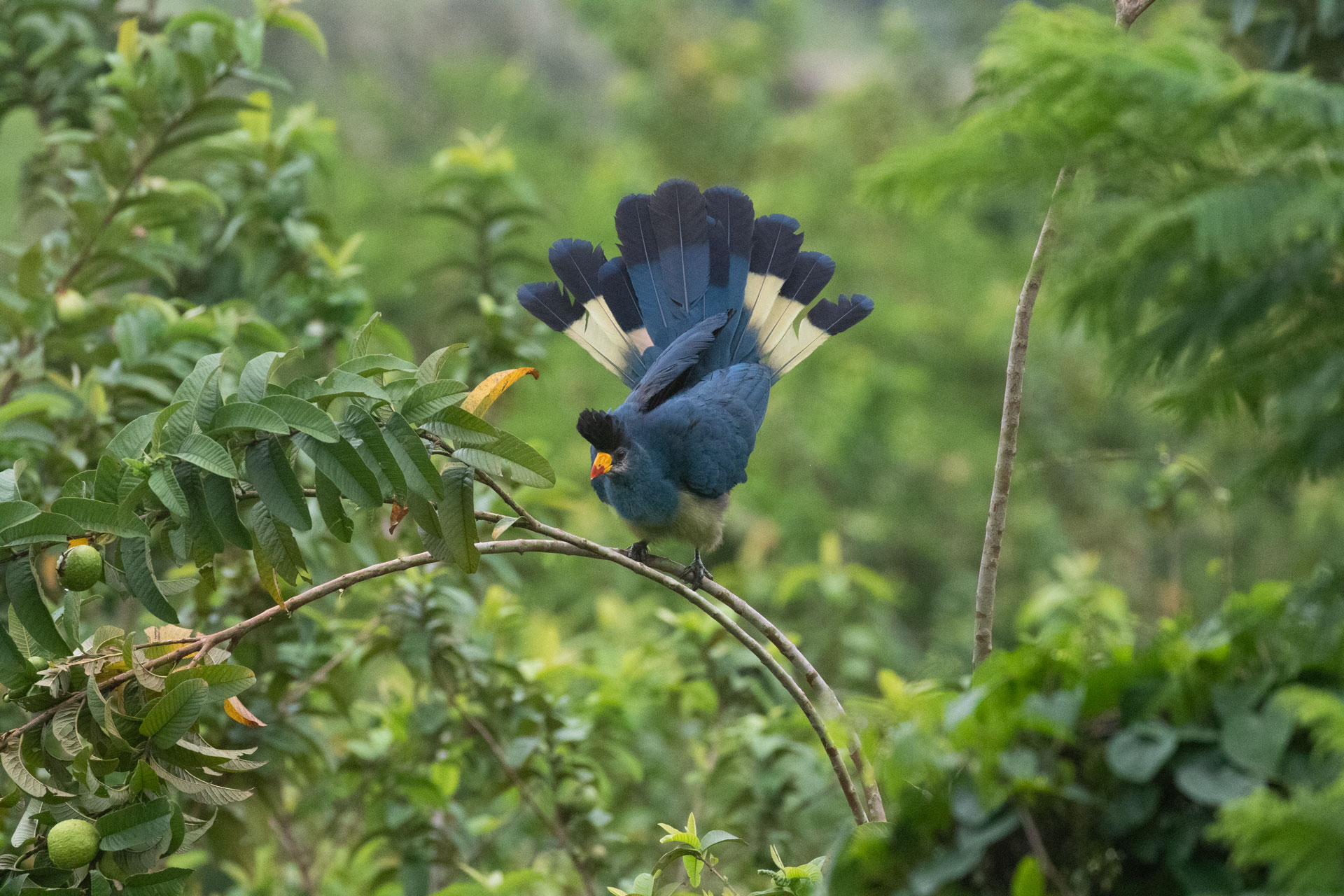
The forest in Bwindi is thick, green, and often covered in mist. Birding here takes place along forest trails where patience and careful listening are essential. Many species remain hidden in the canopy, and their presence is often first detected through soft whistles or distinct calls. With the help of skilled guides, birders search for rare species such as the African Green Broadbill, Rwenzori Turaco, and Shelley’s Crimsonwing.
The Ruhija sector of Bwindi is especially famous among serious birders because it offers some of the best chances to observe Albertine Rift species. The combination of high altitude and dense forest creates a unique ecosystem where rare birds thrive.
Bwindi also allows visitors to combine bird watching with gorilla trekking. This makes it possible to experience two of Uganda’s greatest wildlife treasures in one destination.
Queen Elizabeth National Park – Exceptional Bird Diversity
Queen Elizabeth National Park is often described as one of the most bird-rich parks in Africa. With approximately 600 recorded species, the park offers extraordinary diversity within a single protected area.
The park’s landscapes include open savannah, crater lakes, wetlands, river channels, and forest patches. Each of these habitats supports different bird populations. A boat cruise along the Kazinga Channel is one of the highlights of birding in Queen Elizabeth. During the cruise, visitors can observe water birds resting along the shoreline, large pelicans flying overhead, fish eagles calling from treetops, and colorful kingfishers diving for prey.
Maramagambo Forest, located within the park, provides an opportunity to search for forest species, while the open plains are ideal for spotting raptors and grassland birds. The wide range of environments within Queen Elizabeth makes it an essential part of most Uganda Birding Safaris.
Kibale National Park – Tropical Forest Birding
Kibale National Park is a tropical rainforest known for its primates, but it is equally important for bird watching. The forest supports more than 375 bird species, many of which are forest specialists.
Birding in Kibale requires focus and attention to detail. The forest canopy is high, and many birds move quietly among the branches. Early morning walks provide the best opportunities to hear the clear calls of turacos, barbets, and other forest dwellers. The nearby Bigodi Wetland Sanctuary adds even more diversity, combining swamp and woodland species within a small area.
Kibale is particularly attractive for visitors who want to combine chimpanzee tracking with bird watching. This creates a balanced safari that includes both primate encounters and rich birdlife.
Kidepo Valley National Park – Remote and Unique Northern Species
Kidepo Valley National Park is located in the remote northeastern region of Uganda. Its isolation has helped preserve a wild and untouched landscape that supports nearly 475 bird species.
The park’s open savannah and dry plains attract species that are less common in other parts of Uganda. Birders visiting Kidepo often search for unique northern species that are rarely seen elsewhere in the country. The dramatic scenery of mountains and wide valleys adds to the experience, creating a feeling of true wilderness.
Because Kidepo receives fewer visitors compared to other parks, birding here feels private and exclusive. It is an excellent destination for experienced birders seeking rare and specialised sightings.
Queen Elizabeth National Park – Exceptional Bird Diversity
Queen Elizabeth National Park is often described as one of the most bird-rich parks in Africa. With approximately 600 recorded species, the park offers extraordinary diversity within a single protected area.
The park’s landscapes include open savannah, crater lakes, wetlands, river channels, and forest patches. Each of these habitats supports different bird populations. A boat cruise along the Kazinga Channel is one of the highlights of birding in Queen Elizabeth. During the cruise, visitors can observe water birds resting along the shoreline, large pelicans flying overhead, fish eagles calling from treetops, and colorful kingfishers diving for prey.
Maramagambo Forest, located within the park, provides an opportunity to search for forest species, while the open plains are ideal for spotting raptors and grassland birds. The wide range of environments within Queen Elizabeth makes it an essential part of most Uganda Birding Safaris.
Frequently Asked Questions
What types of birding tours do you offer?
We offer a variety of birding tours, including short day trips, extended safaris, specialized tours focusing on endemic species, and comprehensive birding and mammal watching expeditions across Uganda and East Africa
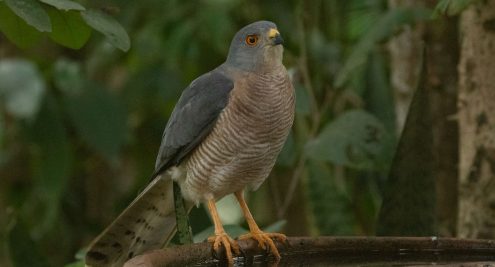
Uganda hosts over 1,000 bird species. On our tours, you can expect to see a diverse range of species including the Shoebill, African Green Broadbill, Rwenzori Turaco, and the Great Blue Turaco, among many others
Yes, we offer customized birding tours tailored to your specific interests and schedule. Our expert guides will work with you to create an itinerary that maximizes your birding experience.
The best times for birdwatching in Uganda are during the dry seasons, from December to February and June to September. These periods offer favorable weather conditions, making it easier to spot birds.

We recommend bringing binoculars, a field guide for East African birds, comfortable walking shoes, light clothing, a hat, sunscreen, insect repellent, and a camera. Detailed packing lists are provided upon booking
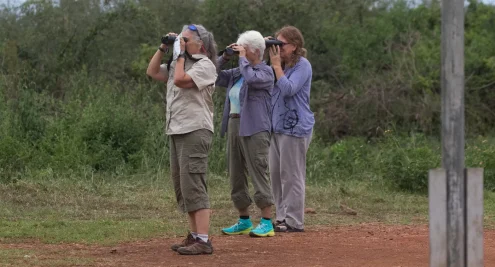
You can book a tour through our website by filling out the booking form, or by contacting us directly via email or phone. Our team is ready to assist you with any questions and help you plan your perfect birding adventure
Stories to Inspire
in their own words

By Hannah
What it's like to bird in Uganda
By Hannah and Erik
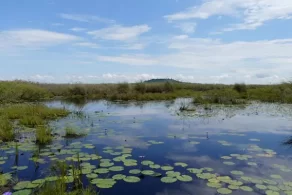
Shoebill in the Mabamba Swamps Uganda
By Hugh Powell
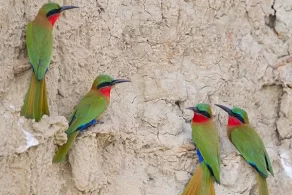
7 things a Uganda safari taught me about birding

By Laura Erikson
Coming home from Uganda
Birds of Uganda
Special and Iconic Birds of Uganda
Some birds of Uganda are considered iconic because they are rare, unusual, or visually striking. The Shoebill is perhaps the most famous. Its large shoe-shaped bill and calm, statue-like behavior make it one of Africa’s most desired sightings. Mabamba Swamp near Entebbe remains one of the best places in the world to observe it.
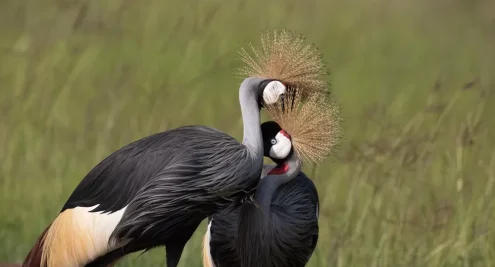
The Grey Crowned Crane, which is Uganda’s national bird, is another special species. It is often seen in wetlands and grasslands. Its golden crown of feathers makes it one of the most elegant birds in Africa.
The Rwenzori Turaco, found in high-altitude forests, is admired for its vibrant green and blue plumage. The African Green Broadbill, although small and difficult to locate, is highly valued among experienced birders because of its limited distribution and shy behaviour.
Uganda is also home to the rare Fox’s Weaver in the northeast and the striking Red-faced Barbet in Lake Mburo National Park. Each region adds unique species to a birder’s life list.
Migratory Birds in Uganda
Uganda not only host resident species. Between November and April, migratory birds from Europe and North Africa arrive to escape winter. These migratory birds increase species diversity and provide seasonal excitement for bird watchers.
During this period, wetlands and open fields become even more active. Birders visiting Uganda during these months often record higher daily species numbers. This makes the migratory season ideal for those who want to maximise their Uganda bird checklist.
Forest Birds of Uganda
The tropical forests of Uganda deserve special attention. Bwindi Impenetrable National Park alone supports over 350 bird species. Many of these birds are adapted to dense canopy environments where sunlight filters softly through thick vegetation.
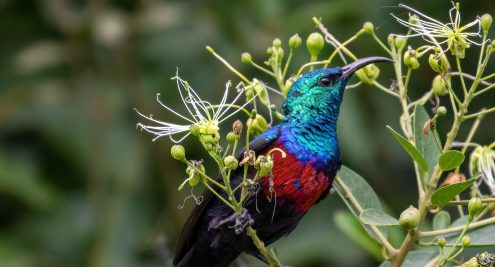
Birding in forests requires patience and skill. Birds may not always be visible immediately, but their calls guide experienced birding guides to their location. Early morning forest walks often reveal turacos moving through treetops, sunbirds feeding on flowers, and flycatchers darting between branches.
Kibale Forest and Semuliki National Park also contribute unique lowland forest species. Semuliki is particularly important because it hosts bird species that are more typical of Central Africa, giving Uganda an even broader bird diversity.
Raptors and Birds of Prey in Uganda
Uganda is an excellent destination for raptor enthusiasts. The country supports numerous species of eagles, hawks, falcons, and vultures. In open savannah parks, large birds of prey can often be seen soaring high above plains or perched in tall trees scanning for prey.
The Martial Eagle, African Hawk-Eagle, Bateleur, and Secretary Bird are some of the most impressive species recorded. Wetland areas also provide opportunities to see African Fish Eagles hunting near water bodies.
What to Expect on Uganda Birding Safaris 2026–2027
Uganda Birding Safaris are designed to maximise species counts while providing comfortable travel. Most safaris include early morning bird walks, guided forest hikes, boat cruises along rivers or lakes, and game drives in savannah parks.
Professional bird guides play a key role in locating rare species. They understand bird calls, nesting behaviour, feeding patterns, and seasonal movements. Their experience increases the chance of observing even the most secretive birds.
Accommodation ranges from luxury safari lodges to mid-range and budget options. Many lodges are located near bird-rich habitats, allowing guests to continue bird watching directly from their rooms or gardens.
What makes us unique
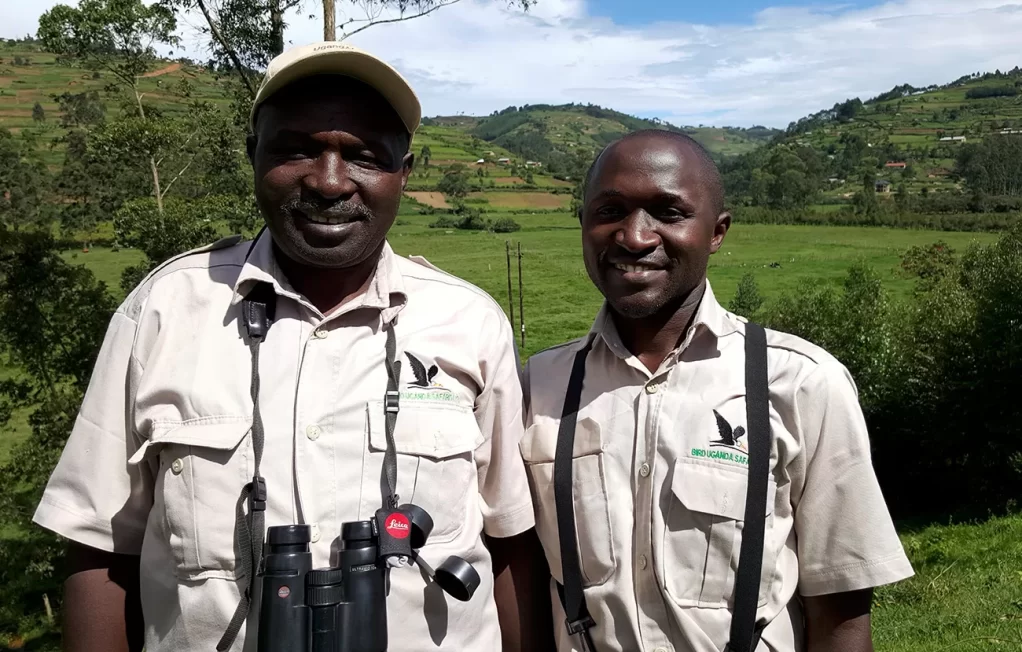
Reasons to believe in Bird Uganda Safaris

Our Partners
WHO WE WORK WITH