
Life Birds That Redefine a Birding Career
Grauer's Broadbill · Green-breasted Pitta · Shelley's Crimsonwing
Some species appear on a birder's life list after years of planning and repeated attempts. In the Albertine Rift, the heart of Uganda's extraordinary avifauna, three species stand apart as the most celebrated — and most challenging — life birds on the continent: Grauer's Broadbill (Pseudocalyptomena graueri), the Green-breasted Pitta (Pitta reichenowi), and Shelley's Crimsonwing (Cryptospiza shelleyi). Each is an Albertine Rift endemic of the highest order: found nowhere else on Earth, infrequently encountered, and fiercely sought by dedicated birders on every continent.
Thanks to a two-decade investment in Uganda's local site guide network — and new preliminary monitoring data from Bird Uganda Safaris — all three are now achievable in ways that were not possible even a decade ago. For birders building a serious African life list, and for those seeking a luxury expedition without compromise on target species performance, this article is your definitive guide.
Uganda: The Premier Destination for Albertine Rift Endemics and Specials
With over 1,070 recorded species, Uganda holds more than half of all sub-Saharan Africa's bird families within a country smaller than many U.S. states. BirdLife International recognises the Albertine Rift — running along Uganda's western frontier — as Africa's single most important concentration of endemic bird species. Over 40 species are endemic to this region, and Uganda provides access to more of them — including the most sought-after — than any other country within the Rift.
For dedicated birders targeting a complete set of Albertine Rift endemics and specials, Uganda is not simply a good destination. It is the destination. The combination of accessible montane forest, expert local site guides, reliable sighting records, and proximity to multiple endemic zones makes Uganda the most efficient and most rewarding country in which to assemble this critical set of lifers.
Uganda has also developed the finest network of local site guides in the region — specialists who live and work within the key endemic zones year-round. This distinction is central to the story of how Uganda's hardest birds have become findable.
Three Flagship Species: Uganda's Most Celebrated Lifers
For birders arriving with a target list, these three species anchor the itinerary. They represent the highest level of field challenge Uganda offers — and the highest level of reward. Below is a detailed profile of each, including the new field data that is changing how we approach finding them.
Grauer's Broadbill — Pseudocalyptomena graueri
Grauer's Broadbill — still widely searched under its legacy name, African Green Broadbill — is among the most coveted life birds available to visiting birders in Africa. Restricted to montane forest above 1,500m along the Albertine Rift, its range is confined to a handful of sites in Uganda, Rwanda, and eastern DRC. In Uganda's Bwindi Impenetrable National Park, the Ruhija sector holds the most accessible and reliably monitored population of this species within its range.
Until recently, finding this species depended almost entirely on chance or on the individual knowledge of a single exceptional guide. Bird Uganda Safaris' systematic monitoring programme, begun in 2024, has fundamentally changed this. Preliminary field data now documents territory locations, seasonal activity patterns, and breeding cycles with a precision that directly informs trip planning — turning a historically unpredictable species into a target that serious listers can plan around with confidence.
Green-breasted Pitta — Pitta reichenowi
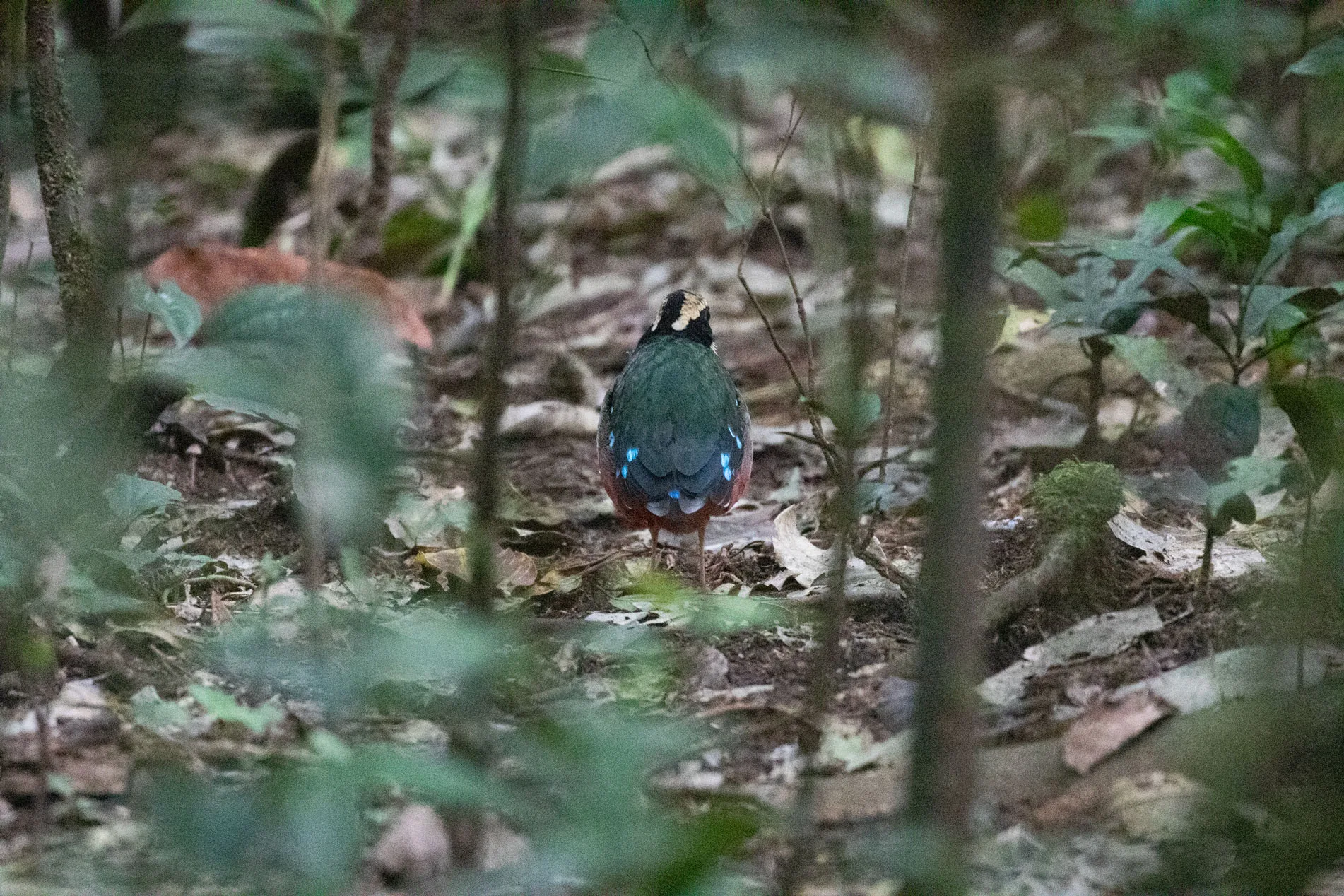
Among Africa's pittas, the Green-breasted Pitta commands a special place on every serious lister's wishlist. Its reputation — spectacularly coloured, devastatingly secretive — has made it one of the most discussed and most desired birds in African ornithology. Kibale National Park, in Uganda's western highlands, offers the continent's most reliable access to this species, supported by a local guide network that holds intimate knowledge of active calling territories.
For decades, this was a bird that required patience and fortune in equal measure. The field intelligence now available through Bird Uganda Safaris' site guide network has made targeted searches more productive than ever before. Crucially, our monitoring has documented the species' breeding and display calendar — information that should now drive every serious birder's Uganda itinerary.
The Green-breasted Pitta displays most actively during January–March and June–August. During these windows, males call persistently from the forest floor, dramatically improving detectability. Outside these windows, the species reverts to its characteristic silence and is significantly harder to find.
Shelley's Crimsonwing — Cryptospiza shelleyi
Shelley's Crimsonwing occupies a position at the very pinnacle of Albertine Rift finch listing. Dense undergrowth in high-altitude montane forest, cryptic plumage, and an elusive nature combine to make every confirmed sighting an event. Even experienced birders resident in Uganda for years may have only a handful of records. Yet for serious listers, a trip without attempting this species is incomplete.
The combination of Uganda's site guide network and the habitat mapping conducted by local guides at Bwindi's Ruhija sector has made targeted Shelley's Crimsonwing searches more productive than at any previous period in the species' recorded history in Uganda. This is a bird that demands multiple hours of focused searching, expert local knowledge, and, frequently, early-morning visits to specific microhabitats identified by site guides with years of accumulated field records.
Preliminary Breeding Data: Planning Your Trip Around Peak Activity
Bird Uganda Safaris, working in coordination with our network of site guides, has collected the first systematic field records of Grauer's Broadbill and Green-breasted Pitta breeding activity in Uganda. These data — which inform our trip planning but remain preliminary pending full publication — represent a significant advance in understanding when and where these species are most detectable.
Grauer's Broadbill — Breeding Field Records
Our field observations indicate that Grauer's Broadbill completes two breeding cycles annually. This is a notable finding that provides dedicated birders with two distinct windows of peak territorial activity each year.
| Stage | Field Observation (Preliminary) |
| Breeding seasons | February–April and June–August (two broods per year) |
| Nest construction | Approximately 14 days |
| Incubation period | Approximately 18–21 days |
| Chick rearing (on nest) | 2–3 weeks at the nest |
| Post-fledgling period | Several additional weeks of parental attendance outside the nest |
| Peak detectability | Height of each breeding season: March–April and July–August — birds most vocal and territorial |
Green-breasted Pitta — Display and Breeding Windows
Our field records confirm two primary breeding and display windows for Green-breasted Pitta in Uganda: January–March and June–August. During these periods, males engage in persistent calling and display behaviour from the forest floor — dramatically increasing their detectability relative to the rest of the year.
For dedicated listers, booking your Uganda trip within one of these windows is not simply advisable — it is the most important single decision you can make when planning for this species. Outside these periods, the Green-breasted Pitta falls largely silent and reverts to behaviour that can defeat even the most patient and experienced searcher.
Where to Stay: Luxury Lodges at Uganda's Key Endemic Sites
For birders who require exceptional comfort alongside exceptional birding — and who understand that proximity to the forest at first light is the most important logistical factor in finding shy endemic species — Uganda's luxury lodge offering has matured substantially. Below are the properties Bird Uganda Safaris recommends adjacent to the key target-species sites.
Bwindi Impenetrable National Park — Ruhija Sector
Target lifers: Grauer's Broadbill · Shelley's Crimsonwing · 24 Albertine Rift Endemics
Sanctuary Gorilla Forest Camp (andBeyond)
Set deep inside Bwindi — one of the most atmospheric camps in Africa. Recently fully renovated (reopened 2025), with ten expanded luxury suites featuring floor-to-ceiling windows directly into the forest canopy. Two queen beds, ensuite bath with jungle views, and a spa. Birding walks depart directly from camp into prime endemic habitat. Arranging specialist birding guides through Bird Uganda Safaris is strongly recommended.
Kiho Gorilla Safari Lodge
A luxury retreat 7km from Ruhija — the critical Bwindi sector for Grauer's Broadbill and Shelley's Crimsonwing on the Mubwindi Trail. Spacious, well-appointed suites with forest views. Ideal base for early-morning access to Ruhija's birding trails.
Ruhija Gorilla Safari Lodge
Well-regarded for its position adjacent to Ruhija, comfortable accommodation with excellent local guide connections. A practical luxury option for birders who want the shortest possible distance between their bed and the Broadbill's forest.
Kibale National Park
Target lifers: Green-breasted Pitta · Chimpanzees · Dusky Crimsonwing · Primate Lodge Specialties
Kyaninga Lodge
Among Uganda's finest properties overall. Nine elegantly designed cottages set on a high wooden walkway above Kyaninga Crater Lake, with Rwenzori Mountains as backdrop. Butler service, king-size beds, and exceptional cuisine. Located near Kibale with premium access arrangements for birding at first light — including exclusive guide coordination through Bird Uganda Safaris for Green-breasted Pitta searches.
Primate Lodge Kibale
Positioned at the forest edge, directly at the start of chimpanzee habituation routes — which double as prime habitat for Green-breasted Pitta and other Kibale specialties. Luxury cottages with forest outlook, bespoke birding walks, and a genuine immersion in Kibale's soundscape.
Kibale Lodge
Eight luxury bandas with personal butler service and terrace views of the Rwenzori Mountains and Queen Elizabeth plains. The lodge's 150-acre terrain includes Lake Lugembe, holding over 100 bird species. A refined base for Kibale endemics and specials.
Semliki Wildlife Reserve & Western Rift Floor
Target lifers: Shoebill · Forest Specials · Over 400 Species · West African Endemics
Semliki Safari Lodge
The jewel of the western Rift floor, set in Semliki Wildlife Reserve with views toward the Rwenzori Mountains. Over 400 bird species recorded on and around the property — one of the highest densities of any single lodge in Uganda. Boat trips into papyrus channels provide access to Shoebill and papyrus specials. Recommended as a luxury add-on for serious listers completing their Albertine set.
Murchison Falls National Park & Mabamba Wetlands
Target lifers: Shoebill · Papyrus Gonolek · African Finfoot · Savannas Specialties
Nile Safari Lodge
A sophisticated riverside property overlooking the Nile delta — prime territory for boat-based Shoebill searches. Luxury tented suites with direct river views, infinity pool, and curated game drives. The most well-positioned luxury option for combining Shoebill searches with Murchison Falls' savanna specials.
Chobe Safari Lodge
Set above the Nile, with excellent access to the papyrus wetlands where Shoebill is reliably found. Game packages can be complemented with specialist birding arrangements through Bird Uganda Safaris — ensuring that the Shoebill search is coordinated with local boat guides who know the birds' current roost sites.
Top 20 Target Species: Uganda's Most Sought-After Life Birds
Uganda's endemics and specials extend well beyond the three flagship species. The table below represents Bird Uganda Safaris' definitive target list for serious listers visiting Uganda — the birds that drive dedicated birders to plan specific expeditions, often returning multiple times until each species is secured.
| Common Name | Scientific Name | Why This Species Matters to Serious birders |
|---|---|---|
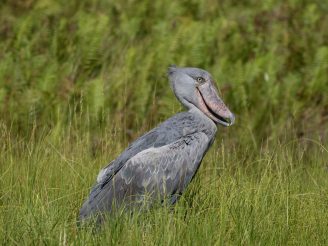
| Shoebill | Balaeniceps rex | The most iconic life bird in Africa. Mabamba Wetland is the most reliable site on the continent. |
| Grauer's Broadbill | Pseudocalyptomena graueri | Formerly African Green Broadbill. Under active Bird Uganda Safaris monitoring — most reliably found at Ruhija, Bwindi. |
| Green-breasted Pitta | Pitta reichenowi | A flagship lifer for Africa. Best sought during January–March and June–August display windows at Kibale National Park |
| Shelley's Crimsonwing | Cryptospiza shelleyi | The ultimate Albertine Rift finch lifer. Requires expert site-guide coordination at Ruhija |
| Fox's Weaver | Ploceus spekeoides | Uganda endemic. A sought-after specialty of a handful of eastern wetland sites. |
| Grauer's Warbler | Graueria vittata | Papyrus endemic of the Albertine Rift. A skulker rewarded by patient observers. |
| Nahan's Partridge | Ptilopachus nahani | Critically Endangered. A highly sought specialty of Uganda's lowland forest patches |
| African Pitta | Pitta angolensis | An intra-African migrant and coveted lifer, making seasonal appearances in Uganda's forest habitats |
| Bar-tailed Trogon | Apaloderma vittatum | A stunning canopy specialty of montane forest — a rewarding find for any serious lister. |
| White-crested Turaco | Tauraco leucolophus | Uganda's most distinctive turaco and an outstanding photographic lifer |
| Rwenzori Turaco | Ruwenzorornis johnstoni | High-altitude Rwenzori endemic — a challenging and spectacular lifer |
| Handsome Francolin | Pternistis nobilis | Albertine Rift endemic of bamboo forest undergrowth. A satisfying specialty lifer |
| African Green Broadbill | Pseudocalyptomena graueri | Legacy name retained for search engines. Same species as Grauer's Broadbill |
| Chapin's Flycatcher | Fraseria lendu | Rarely encountered Albertine endemic — a genuine field challenge and a prized lifer |
| Neumann's Warbler | Hemitesia neumanni | Dense-undergrowth specialty of Albertine Rift forest. Persistence rewarded |
| Dusky Crimsonwing | Cryptospiza jacksoni | Albertine Rift endemic finch — slightly more accessible than Shelley's, but still a sought-after target |
| Yellow-eyed Black Flycatcher | Melaenornis ardesiacus | Striking and little-known Albertine endemic. A lifer that surprises many first-time Uganda visitors |
| Ituri Batis | Batis ituriensis | Among Africa's most localised batis species — an exciting bonus lifer in western Uganda forest |
| Puvell's Illadopsis | Illadopsis puveli | Secretive forest babbler specialty of Uganda's western forest belt |
| Black Bee-eater | Merops gularis | A spectacular and photogenic species of forest edges — a favourite addition to any Uganda trip list |