
International Tours · Citizen Science · Guide Training · Itinerary Design · Multi-Country Expertise
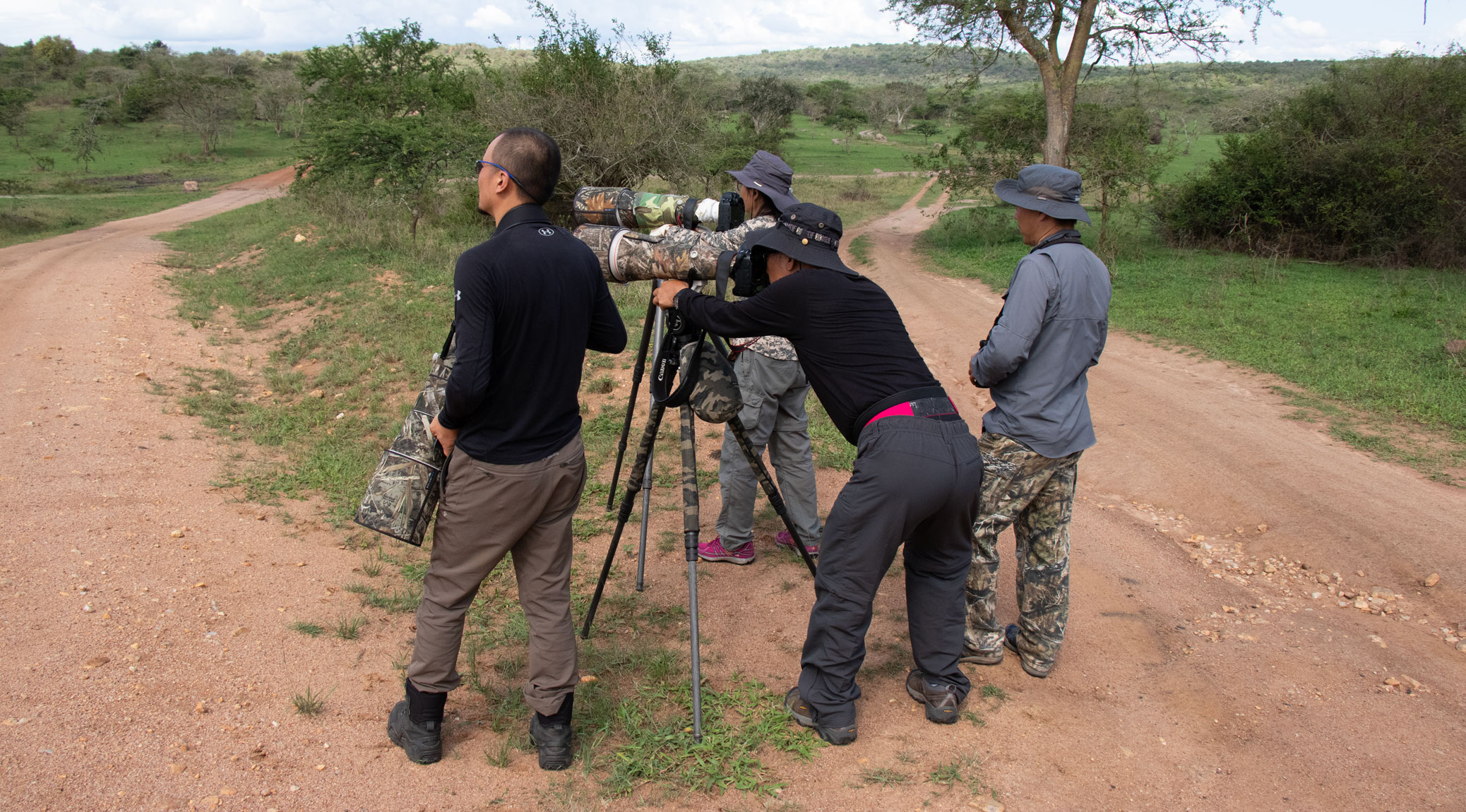
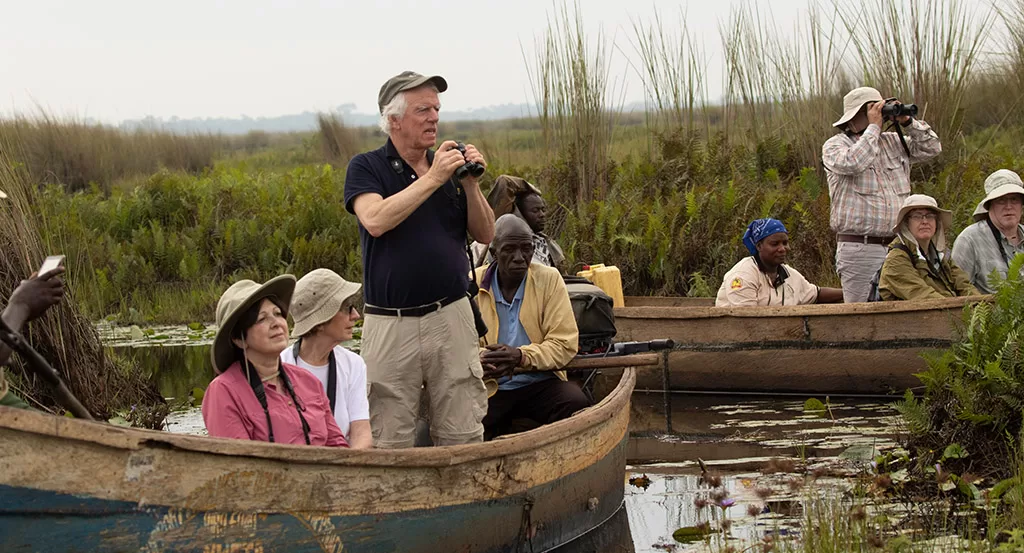
Africa is home to more than 2,400 bird species — from the flamingo-carpeted soda lakes of the Rift Valley and the papyrus swamps of Uganda where the ancient shoebill stork wades, to the fynbos of the Cape and the rainforests of the Congo Basin. But finding these birds, understanding their stories, and turning a birding holiday into a transformative wildlife experience is the art of the professional bird guide. Africa's finest birding guides are not merely people who can identify species by sight and sound: they are naturalists, conservationists, citizen scientists, cultural interpreters, and educators who have collectively led thousands of tours, trained hundreds of successor guides, and contributed irreplaceable data to the global knowledge of African birds.
This ranking celebrates the top ten professional birding guides in Africa — men and women assessed on five criteria: the volume and scope of international birding tours led; their contribution to citizen science through platforms such as eBird, the African Bird Atlas, and national bird-monitoring projects; their commitment to training the next generation of guides; their capacity to guide across multiple African countries; and their skill in designing birding itineraries that open up Africa's most spectacular habitats to international visitors. Whether you are planning a Uganda birding safari, a South Africa birding tour, a Kenya birding holiday, or a cross-continental African birding expedition, these are the guides whose names you need to know.
Herbert Byaruhanga - Uganda
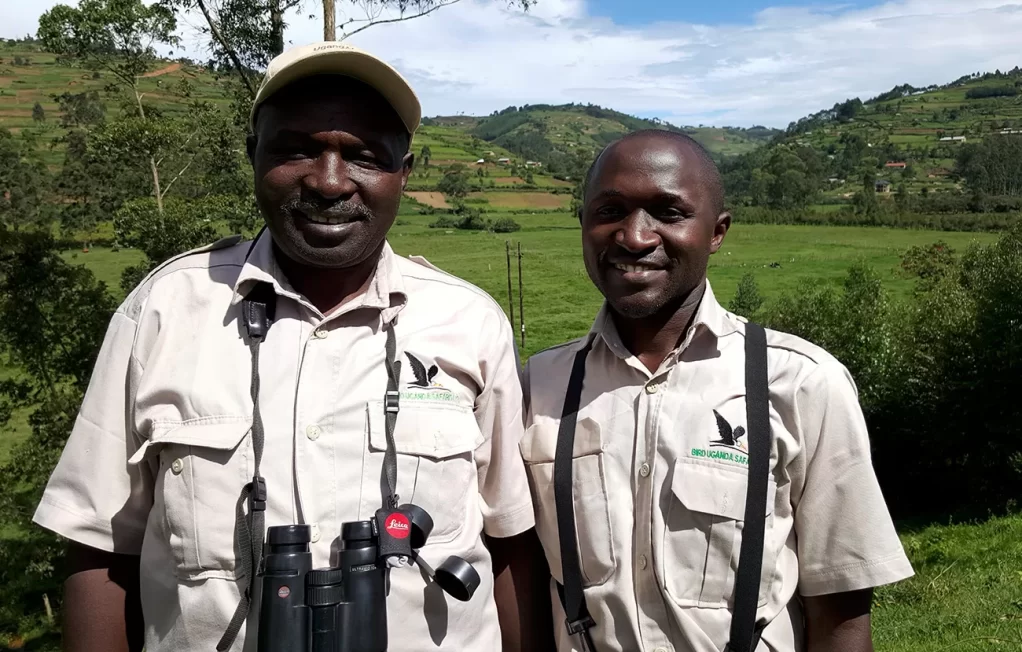
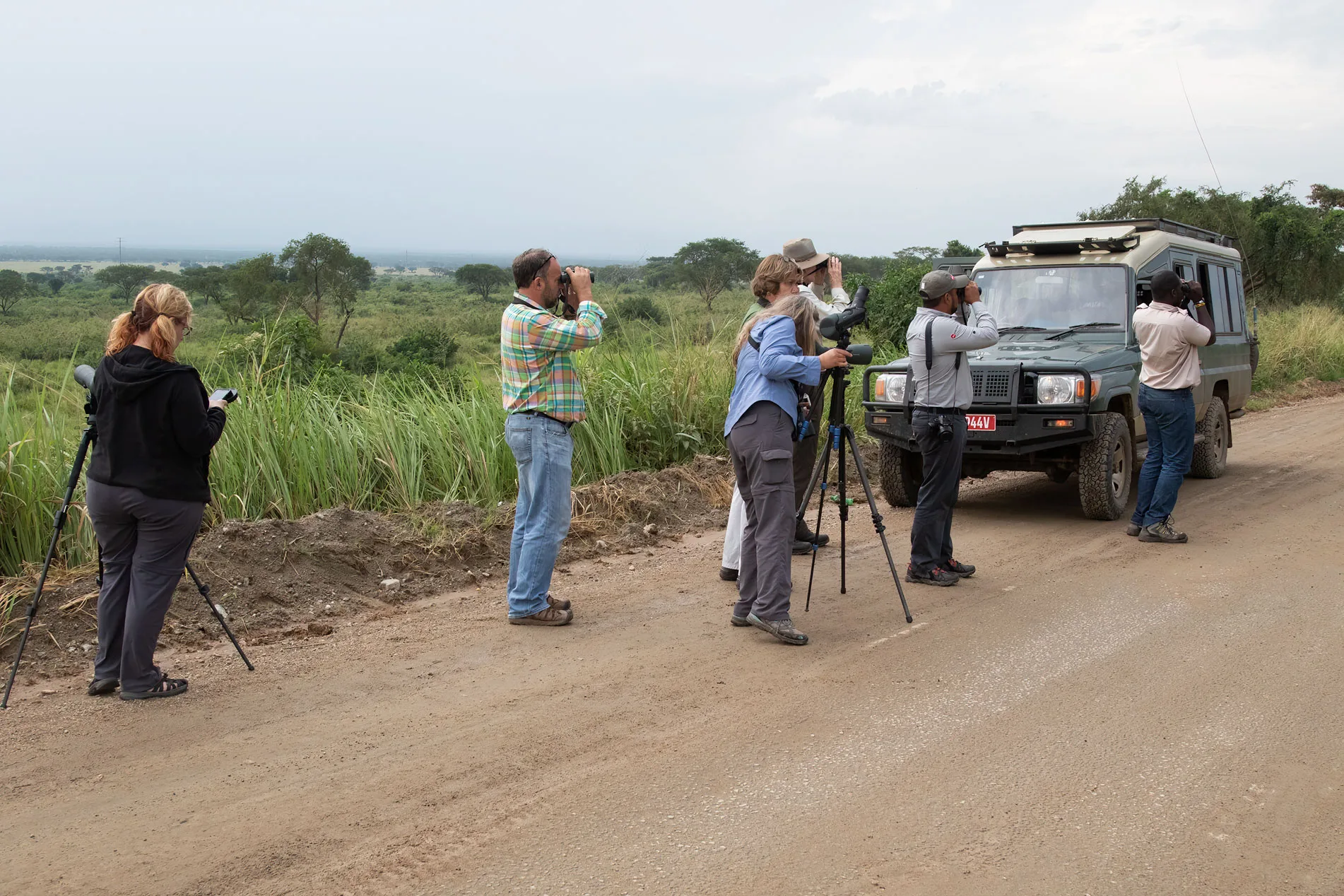
No figure in African birding guiding has shaped a national birding industry as completely as Herbert Byaruhanga has shaped Uganda's. Over more than three decades of active guiding, training, and avitourism development, Byaruhanga has transformed Uganda from a destination known primarily for mountain gorillas into one of Africa's most celebrated and sought-after birding destinations — a country where over 1,070 bird species await the visiting birder, including the iconic shoebill stork, the grey crowned crane (Uganda's national bird), the African green broadbill, Shelley's crimsonwing, and more than 50 Albertine Rift endemic species found nowhere else on Earth. His founding of Bird Uganda Safaris created the platform through which thousands of international birding clients — from the United Kingdom, the United States, Australia, and beyond — have experienced Uganda's extraordinary birdlife under expert guidance.
As a BirdLife International-accredited bird-guide trainer for East Africa, Byaruhanga has trained an estimated 90 to 95 percent of Uganda's professional bird guides — a statistic with no parallel in any other country on the continent. His training methodology goes beyond species identification: he instils in his trainees the skills of natural history interpretation, conservation storytelling, customer care, and community engagement that define world-class guiding. His trainees now operate in Uganda, Kenya, Tanzania, Rwanda, and beyond, extending his reach across the region. He is the founder of the Uganda Bird Guides Club, the Uganda Safari Guides Association, the Uganda Young Birders Club, and the Uganda Women Birders Club — four organisations that form the structural backbone of Uganda's guiding profession.
As an itinerary designer, Byaruhanga has mapped Uganda's birding landscape more comprehensively than any other individual, developing tour routes that thread together the papyrus wetlands of Mabamba Swamp and Lutembe Bay (for the shoebill), the chimpanzee forests of Kibale, the montane forests of Bwindi and the Rwenzori foothills, the savannah of Queen Elizabeth and Murchison Falls, and the remote forests of Semuliki — each rich in species and each requiring intimate local knowledge to guide effectively. He has led hundreds of international birding tours and presented Uganda's birding story at the British Birdfair and major North American birding festivals, making him Africa's most internationally recognised grassroots birding guide and advocate.
Key Achievements
▸ Founded Bird Uganda Safaris — East Africa's premier specialist birding tour operator
▸ BirdLife International-accredited bird-guide trainer — trained 90–95% of Uganda's guides
▸ Founded Uganda Bird Guides Club, Uganda Safari Guides Association, Young & Women Birders Clubs
▸ Organised the inaugural International Conference for Women Birders (Kampala, 2023)
▸ Regular speaker at British Birdfair and major US birding festivals on avitourism and guiding
▸ Designed comprehensive birding itineraries across all of Uganda's major ecosystems
Adam Riley - South Africa / Global
When birders around the world think of professional birding tour operations, the name Rockjumper stands at the top of the list — and at the centre of Rockjumper is its founder, Adam Riley. Raised in rural KwaZulu-Natal, South Africa, Riley developed an obsession with birds as a boy and pursued it with extraordinary dedication, eventually qualifying as a Chartered Accountant before making the defining pivot of his career: founding Rockjumper Birding Tours in 1998, alongside friend Jonathan Rossouw. What began as a small South African birding operation has grown under Riley's sole ownership and management since 2000 into the world's largest dedicated birding tour company, operating tours to every continent on Earth and offering an unmatched portfolio of destinations to the global birding community.
Adam Riley's personal guiding credentials are as impressive as his business achievements. With more than 8,000 bird species seen worldwide — including over 2,000 in Africa — he is one of the most experienced birders on Earth. He has led tours to countries across Africa including South Africa, Kenya, Tanzania, Uganda, Ethiopia, Angola, Namibia, Botswana, Madagascar, and beyond, as well as to destinations as remote as Papua New Guinea, Antarctica, Alaska, and Colombia. His African tours are legendary among serious birders for their thoroughness, their expert leadership, and their ability to deliver species that other guides miss. His client testimonials consistently highlight his patience, encyclopaedic knowledge, and extraordinary ability to find elusive birds in challenging conditions.
Beyond his guiding work, Riley has built Rockjumper into an institution that trains and develops guides, produces educational content, and contributes to conservation through the Rockjumper Bird Conservation Fund. He co-founded ORYX Photo Tours (2010) and ORYX Worldwide Wildlife Safaris (2014), extending his expertise into wildlife photography and general safari operations. He has received the Owl Award from BirdLife South Africa — presented for contributions beyond the ordinary call of duty in promoting bird conservation — and continues to lead tours personally while overseeing the company he built into a global birding institution. Rockjumper has led over 30 birding tours to Uganda alone and operates across all of Africa's major birding destinations.
"Africa's birds are among the most spectacular on Earth. Every tour is an opportunity to share that wonder and to contribute something meaningful to the conservation of the habitats that make it possible."
Terry Stevenson - Kenya (originally UK)
On 30 November 1986, Terry Stevenson and a team of Kenya-based birders set a World Big Day record that has never been broken: 330 bird species seen in a single day in Kenya. That record — still standing after four decades — speaks to both Kenya's extraordinary avian richness and to Stevenson's unrivalled knowledge of where to find the birds, when to look, and how to plan a day's birding to extract the maximum species count from a single country. It is perhaps the most dramatic illustration of the expertise that has made Stevenson one of Africa's and the world's most respected and in-demand professional birding guides.
Originally from England, Stevenson made Kenya his permanent home in 1977 and has spent nearly five decades immersed in East African ornithology and guiding. He served as resident ornithologist at Lake Baringo from 1981 to 1985, during which time he wrote The Birds of Lake Baringo — an early benchmark in site-specific East African birding literature. His most lasting contribution to birding in the region is as senior author of the Field Guide to the Birds of East Africa: Kenya, Tanzania, Uganda, Rwanda, Burundi — the standard reference used by birders and guides throughout East Africa and one of the most comprehensive regional field guides ever published. He is also co-author of Birds of the Horn of Africa: Ethiopia, Eritrea, Djibouti, Somalia and Socotra, the definitive guide to that species-rich corner of the continent.
As a professional tour guide, Stevenson has led countless tours across East Africa, South Africa, Namibia, Botswana, Ethiopia, and Madagascar for Field Guides Birding Tours, one of North America's most respected birding tour companies, as well as for British and other international operators. He is a member and advisor to the Bird Committee of Nature Kenya and the East African Rarities Committee — roles that keep him at the centre of the region's ornithological community. His combination of academic rigour, extraordinary field experience, and decades of guiding international clients makes him one of the most trusted names in East African birding.
Dr Callan Cohen - South Africa
When Callan Cohen founded Birding Africa in Cape Town in 1997 — the same year he began his doctoral research at the FitzPatrick Institute of African Ornithology at the University of Cape Town — he was laying the groundwork for what would become one of Africa's most respected and widely recommended specialist birding tour operations. Over nearly three decades since that founding, Cohen has led more than 100 tours and expeditions to 23 African countries, accumulating a breadth of guiding experience across the continent that very few professionals can match. Voted by Birdwatch magazine as one of the Top 5 Most Recommended Tour Companies in the World (2010), Birding Africa has built its reputation on exactly the kind of deep, country-specific ornithological expertise that Cohen embodies.
Cohen completed a doctorate at the FitzPatrick Institute in collaboration with the University of California, Berkeley, studying the evolution of African desert birds — giving him scientific depth that enriches every tour he leads. He is a Research Associate of the FitzPatrick Institute and has applied his academic background to producing two essential publications: the Southern African Birdfinder, a guide to finding over 1,400 species in southern Africa and Madagascar, and Essential Birding Western South Africa, co-authored with Claire Spottiswoode — a work that also became the foundation for the Western Cape Birding Route website, linking birding to regional tourism in one of the world's most biodiverse landscapes. He has acted as consultant for the BBC Natural History Unit and has guided luminaries including Bill Oddie through Cape Town's birdlife.
Cohen's tour portfolio spans the full breadth of African birding — from the Western Cape's endemic-rich fynbos and the Karoo's arid-zone specialists to Ethiopia's highland endemics, the forests of Cameroon's Gulf of Guinea, the papyrus wetlands of Uganda, and the shores of Madagascar. He designs itineraries that are widely praised for their thoroughness and logistical intelligence, ensuring that visiting birders from North America, Europe, and Australia can access the continent's most sought-after species in the most efficient way possible. His tours consistently lead international clients to tick species they have sought for years — a testament to the combination of scientific knowledge and accumulated field experience that define his guiding.
Washington Wachira - Kenya
Washington Wachira is arguably Kenya's most multi-dimensional naturalist-guide — a man who combines a PhD in Environmental Science with a TED Talk watched by millions, a National Geographic Explorer fellowship, the chairmanship of the East African Rarities Committee, expertise in birds of prey, herpetology, and primatology, an award-winning wildlife documentary, and an active career leading birding and nature tours across East Africa. His 2017 TED Talk, For the Love of Birds, introduced the world to the joy and urgency of African birding with a warmth and authority that placed African bird guiding on the global cultural map. For many international visitors planning their first African birding tour, Washington Wachira was the guide who inspired them to come.
Wachira guides for Cisticola Tours across Kenya, Tanzania, Uganda, and Rwanda, bringing to every tour an education background spanning Environmental Science (BSc), Animal Ecology (MSc and PhD), and certificates in Ornithology and Herpetology. He founded the Kenyatta University Birding Club in 2014, introducing hundreds of university students to birding and citizen science, and has served as Manager of the Kenya Bird Map Project — one of the continent's most important bird-distribution datasets. He serves on the Bird Committee of Nature Kenya and chairs the National Bird of Kenya Sub-committee, giving him a direct voice in national bird policy. His herpetological credentials are equally impressive: he wrote the first checklists to the Reptiles of Kenya and Amphibians of Kenya, and in 2021 discovered a lizard species new to science, which was named Agama wachirai in his honour.
As an itinerary designer and tour leader, Wachira is celebrated for his ability to combine meticulous ornithological knowledge with compelling natural history storytelling — a skill reflected in his documentary Urban Crowns (2017), which explored the lives of African crowned eagles in Nairobi's urban forests. He has won multiple nature photography awards, including First Position in the Underwater Category of the 2016 East African Wildlife Photo Competition, and has been featured by Nikon's On the Road Initiative. His work with the African Crowned Eagle project has earned him recognition from the African Primatological Consortium for Conservation. Whether in the highland grasslands of Kinangop, the forests of Kakamega, or the wetlands of Lake Victoria, Wachira delivers a guiding experience that is simultaneously scientifically rigorous and deeply personal.
"Birds are the most accessible and the most misunderstood of Africa's wildlife. Every time I take someone to see their first sunbird or hornbill, I see Africa through fresh eyes."
Claudien Nsabagasani - Rwanda
Claudien Nsabagasani is Rwanda's most accomplished professional birding guide — a country whose compact geography, extraordinary Albertine Rift habitats, and rare endemic species make it one of the most rewarding birding destinations in all of Africa. In 2024, Nsabagasani was honoured with the prestigious Tusk Wildlife Ranger Award, one of Africa's most respected conservation recognitions, affirming a career that has combined professional birding guiding with rigorous scientific monitoring and passionate community education. He began birding in 2002 as a university student studying biology, and what started as an academic curiosity became a defining life's work: building Rwanda's birding tourism industry from the ground up while simultaneously generating some of the country's most important long-term bird population data.
As the Managing Director of Birding and Educational Tours Rwanda, Nsabagasani has led more than 100 birding tours, safaris, and expeditions across Rwanda, Burundi, Uganda, Kenya, Tanzania, and Senegal — an extraordinary record of cross-country guiding that has connected Rwanda's ornithology to the broader East and West African birding networks. His itineraries unlock Rwanda's most spectacular birding habitats: the Albertine Rift forests of Nyungwe and the Volcanoes landscape, where Grauer's broadbill, Handsome francolin, Shelley's crimsonwing, and Ruwenzori nightjar await among the mist; the shores of Lake Kivu; and the wetlands and savannah of Akagera National Park. He has developed guided birding programmes within Rwanda's national parks, training both local site guides and emerging female guides to professional standards.
Nsabagasani's citizen science contributions are exceptional by any measure. He initiated long-term monitoring programmes for common birds and for the endangered and endemic species of the Albertine Rift in Rwanda's Volcanoes Landscape, and has contributed to waterbird counts in Senegal, Mauritania, and Guinea-Bissau — giving him a monitoring footprint that extends from Central Africa to the West African coast. He actively verifies bird sound recordings submitted by citizen scientists to the Planet Birdsong Foundation, contributes to international waterbird-count networks, and promotes birding among Rwanda's schools and local communities through the Rwanda Birding Club. He holds a Certificate in Tourism Management alongside his Biology degree, and is the African Bird Club's Rwanda country representative.
Trevor Hardaker - South Africa
In 2007, Trevor Hardaker became only the second birder in history to record 900 species in the Southern African region — a milestone that reflected decades of meticulous birding across South Africa's diverse habitats, from the Western Cape's fynbos to the KwaZulu-Natal lowveld, the Limpopo bushveld to the Kalahari sandveld. But Hardaker's contribution to birding extends far beyond personal listing achievements. In 2008, he founded the Southern African Rare Bird News service, a daily alert system that has become an indispensable tool for South African birders, professional guides, and visiting international birders seeking to connect with the country's rarest and most unexpected avian visitors. The service — still operated by Hardaker — sends daily reports of rare bird sightings across the subregion, enabling rapid response by the birding community and generating the kind of real-time data that underpins effective rare species monitoring
.
Hardaker chairs BirdLife South Africa's National Rarities Committee — the formal body responsible for evaluating, verifying, and officially accepting records of rare and vagrant birds in South Africa. This role places him at the centre of South African ornithological record-keeping and gives him unparalleled familiarity with the documentation standards required for accepted rare bird records. He co-runs Zest for Birds, which operates regular pelagic birding trips off Cape Town and Durban — expeditions into the Southern Ocean that give birders access to albatrosses, petrels, shearwaters, and other seabirds that are otherwise virtually impossible to encounter. These pelagic trips are among the most popular birding events in the South African calendar and consistently attract both local and international participants.
Hardaker's citizen science work is embedded in the very infrastructure of South African birding. The rare bird news alerts he sends daily represent a form of distributed citizen science coordination, enabling thousands of South African birders to contribute records to national databases and to verify sightings through peer review. He has received the Owl Award from BirdLife South Africa — the organisation's highest recognition for individuals who have gone beyond the ordinary to promote bird enjoyment and conservation — and has undertaken multiple big year challenges that have generated comprehensive checklists of South African birds and contributed to understanding of which species occur where and when across the country's regions.
Judith Mirembe - Uganda
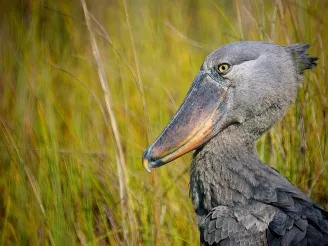
Judith Mirembe is one of the most inspiring and quietly influential figures in East African birding — a professional guide, citizen science coordinator, and conservation activist whose work at Mabamba Swamp on the shores of Lake Victoria has made her one of the world's foremost authorities on the shoebill stork (Balaeniceps rex). The shoebill — a prehistoric-looking, whale-bill-billed giant that inhabits the dense papyrus wetlands of Uganda, South Sudan, and the DRC — is one of Africa's most sought-after and photographed birds, and Mirembe's Shoebill-Watch Uganda initiative has provided some of the most systematic and rigorous monitoring data available for this species in Uganda, making Mabamba Swamp a globally recognised conservation site and a must-visit destination for international birding visitors.
Her credentials as a field guide and conservation scientist are exceptional. She served as a Zoological Society of London (ZSL) EDGE Fellow from 2017 to 2019, a fellowship reserved for conservationists working on Evolutionarily Distinct and Globally Endangered species — placing her in an elite international cohort of biodiversity champions. She served as Bird Population Monitoring Coordinator at NatureUganda (the BirdLife International partner in Uganda) and is the national coordinator for eBird Uganda, linking Uganda's birding community to Cornell Lab of Ornithology's global citizen-science platform. In this role she has championed data quality, encouraged systematic checklist submission, and trained Mabamba's community guides to use digital monitoring tools — embedding citizen science into daily guiding practice.
As the pioneer chairperson of the Uganda Women Birders Club, founded in 2013, Mirembe opened the door of professional bird guiding to women across Uganda, a field that had previously been almost exclusively male-dominated. The club she led grew from a handful of enthusiasts into a nationally recognised body that has trained dozens of women as professional guides, inspired sister organisations — Kenya Women Birders and Rwanda Women Birders — and been profiled by Audubon Magazine and PRX's The World as a global model of gender-inclusive conservation. She guides internationally recognised birding walks at Mabamba, hosts visiting ornithologists, and runs youth birding programmes that are building the next generation of Uganda's birding community.
"When we protect the shoebill, we protect the wetland. When we protect the wetland, we protect the fishing communities, the water supply, and the future. The bird is the ambassador for everything."
Paul Gacheru - Kenya
Paul Gacheru occupies a critical role at the intersection of professional bird guiding, citizen science, and habitat conservation in Kenya — one of Africa's most species-rich birding destinations with over 1,100 recorded species. As Species and Sites Programme Manager at Nature Kenya — the BirdLife International partner in Kenya and one of Africa's oldest conservation organisations — Gacheru oversees the monitoring and protection of Kenya's network of Important Bird and Biodiversity Areas (IBAs): habitats designated for their global significance to bird populations. These include iconic Kenyan birding sites such as the Rift Valley soda lakes (Nakuru, Bogoria, Elementaita), Arabuko-Sokoke Forest on the Indian Ocean coast, Kakamega Forest in the west, and the grasslands of the Kinangop Plateau.
Gacheru is a passionate champion of citizen science as a conservation tool. He has actively led and promoted public bird walks at which observations are fed directly into eBird and the Kenya Bird Map — the citizen-science database mapping the current distribution of all of Kenya's bird species through systematic volunteer fieldwork. He has articulated clearly and publicly the value of ordinary citizens as conservation scientists: 'Birds are very good indicators of the health of the environment, and citizens can help in gathering useful bird data during such bird walks.' This philosophy drives a programme of outreach and education that brings urban Kenyans, school groups, and international visitors into direct contact with Kenya's birdlife and equips them to contribute meaningfully to its monitoring.
As a guiding conservationist, Gacheru has navigated the political and community dimensions of bird-habitat protection across Kenya's diverse regions, working with landowners, local communities, and government agencies to maintain the ecological integrity of sites that are critical to globally significant bird populations. His professional guiding takes him to Kenya's most important birding habitats, where he combines expert bird identification with deep knowledge of each site's ecology, conservation status, and community context — offering visiting birders an experience that is as intellectually rich as it is species-productive. He represents a model of the guide-conservationist whose work in the field directly supports the data and advocacy needed to protect the landscapes that make Kenya one of the world's premier birding destinations.
Amina Mwinga - Kenya (Coastal)
Kenya's Indian Ocean coast is one of Africa's most underrated birding regions — a mosaic of coral-rag forest, mangroves, tidal mudflats, coconut groves, and remnant coastal forest that harbours an exceptional concentration of East African coastal endemics and Palearctic migrants. At the heart of this coastal birding world is Amina Mwinga, one of Kenya's top young female birding guides and a member of Kenya Women Birders — the community of female guides whose growth across East Africa has been one of the most encouraging developments in African birding in the past decade. Mwinga has spent most of her life along the Kenyan coast, where she developed a detailed knowledge of the region's birds from childhood, turning that intimate local familiarity into a professional guiding career of growing international recognition.
Her flagship guiding territory is Arabuko-Sokoke Forest — a 420-square-kilometre coastal forest in Kilifi County that is one of the most important remnant patches of East African coastal forest remaining and a globally recognised Important Bird and Biodiversity Area. Arabuko-Sokoke is home to Sokoke scops-owl, Sokoke pipit, Clarke's weaver, Amani sunbird, and East Coast akalat — a suite of endangered coastal-forest endemics that draw dedicated birders from across the world. Mwinga guides visitors through this forest with the practiced ease of someone who has tracked its owls by ear and knows its paths by instinct, making her an invaluable resource for international visiting birders seeking the forest's most elusive specialities. She also leads tours to the historical Gedi Ruins in Kilifi County and guides Big Five safaris, giving her a breadth of expertise that serves clients with varied wildlife interests.
Mwinga is an active citizen scientist: she contributes systematic bird observation data to the Kenya Bird Map Project and volunteers with A Rocha Kenya — the conservation and research organisation based at Mwamba Field Study Centre on the coast — participating in bird counts, bird ringing, and biodiversity walks that generate scientific data on coastal bird populations. She is certified by the Kenya Professional Safari Guides Association (KPSGA) and holds a Diploma in Tour Guiding and Administration. Her inclusion in the Kenya Women Birders community places her within a growing network of female East African guides whose collective impact on diversity and professional standards in the region's guiding industry is increasingly significant. As a young guide who combines local ecological knowledge, citizen science commitment, and genuine passion for Kenya's coastal birds, Amina Mwinga represents exactly the kind of new voice that is shaping African birding guiding for the next generation.
How to Choose a Professional Birding Guide for Your African Safari
The ten professionals profiled in this ranking represent the gold standard of African birding guiding — individuals who have dedicated their careers not merely to identifying birds but to building the knowledge, the infrastructure, and the human capacity that makes world-class birding possible across the continent. Whether you are planning your first African birding trip or adding another country to a growing life list, the quality of your guide will be the single most important factor in the success of your experience. A great African birding guide is one who combines deep ornithological knowledge with superb fieldcraft, itinerary intelligence, conservation ethics, and the interpersonal skills to make every client feel that they are sharing a personal journey through one of the world's most extraordinary wildlife regions.
When selecting a birding guide or tour operator for Africa, look for the markers that distinguish the professionals on this list: formal training and accreditation (such as BirdLife International accreditation or national professional safari guide certification), evidence of active citizen science participation through platforms like eBird or national bird atlases, track records of leading tours across multiple countries and habitats, involvement in guide training and mentorship, and a commitment to community-based conservation that links birding tourism revenue to habitat protection. The guides named here have all demonstrated these qualities across years or decades of professional practice.
For birding in Uganda — one of Africa's most rewarding destinations for any visiting birder — Herbert Byaruhanga and the network of guides he has trained offer unmatched expertise and access to over 1,070 species across the country's diverse ecosystems. For birding across East Africa, Terry Stevenson's Kenya knowledge, Claudien Nsabagasani's Rwanda expertise, Washington Wachira's multi-country versatility, and Judith Mirembe's Mabamba shoebill experience collectively cover every major habitat and highlight the region offers. For southern Africa and global birding adventures, Adam Riley's Rockjumper and Callan Cohen's Birding Africa offer the widest possible range of expertly guided options. Together, these ten guides and the organisations they represent form the foundation of professional birding in Africa — and the best starting point for any birder planning their next African adventure.