Roughly three hours from Kampala, the road leads into gentle acacia-covered hills. When your phone signal fades and you see zebras outlined against the sunset, you know you’ve arrived somewhere special. This is Lake Mburo, Uganda’s most refined safari spot and one of East Africa’s best-kept secrets for travelers who have already explored the Serengeti and are looking for a more private, personal experience.
Lake Mburo is the only park in Uganda where you can ride next to wild zebra herds, take an early morning walk through the wilderness with a guide, and finish your day watching leopards move through acacia trees under the glow of spotlights from a game vehicle. Later, you head back to a lodge with an infinity pool that looks out over the savannah, making it feel like you have the whole place to yourself for the night.
Highlights
"In twenty years of African safari, I have never felt closer to the wild. No fences. No crowds. Just us and the animals." — Private client, Bird Uganda Safaris.
Location
Kiruhura District, Western Uganda · 240 km / 3.5 hrs from Kampala
Best Time to Visit
June–August & December–February (dry seasons) · Nov–April for peak birding
3 nights minimum for full luxury experience; 5 nights for serious birders
Enquiries
Speak to a Senior Birding Specialist · info@birduganda.com
The Experience
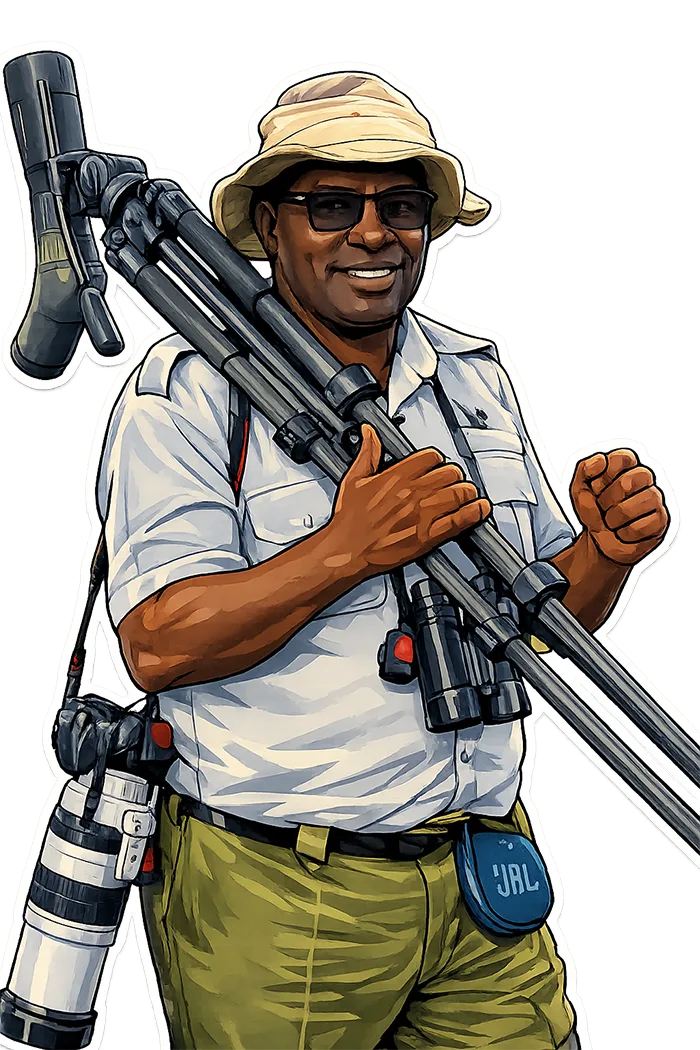
Lake Mburo stands out from other Ugandan parks not only because of its size, but also because it is so accessible. Covering 370 square kilometres, it is a place you can really explore and get familiar with. Each rocky ridge, papyrus swamp, and acacia grove has its own name and story, and there are guides who have spent years discovering what makes each spot special. Bird Uganda’s expert guides help visitors experience the park in a way that goes beyond a typical game drive.
The park features open savannah, old rock outcrops, five linked lakes, and marshes that fill with water during the rainy seasons. This mix of habitats is home to more than 68 types of mammals and over 315 bird species. Lake Mburo is one of the most biodiverse small parks in East Africa, even if it is not widely known.
Why Luxury Travellers Choose Lake Mburo
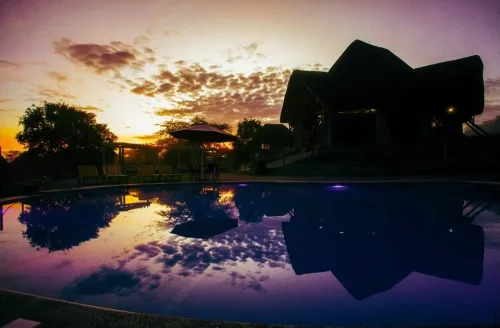
Sunrise at a luxury lodge in Kigambira.
Lake Mburo gives you something special on an African safari—a real feeling of solitude. Unlike the busy parks of the Masai Mara or the Serengeti, you won’t have to share your game drive with lots of other vehicles. There are no lines at waterholes and no crowds at major sightings. Here, every wildlife encounter feels personal.
This is the only park in Uganda where you can go on walking safaris, ride horses, and take exclusive night game drives. These activities let you experience the wild in ways that a vehicle safari just can’t offer. With two excellent lodges, this is a safari you’ll remember long after you’ve shared your photos.
"Lake Mburo is not a consolation prize for those who cannot reach the Mara. It is a destination that the Mara cannot offer." – Hongkong Guest 2022
Wildlife & Natural Heritage
The Leopard of Lake Mburo
Uganda’s top guides say Lake Mburo is the best spot in the country to see leopards. These shy cats roam the acacia woodland freely since there are no busy safari convoys, so sightings are more common. Night game drives with Bird Uganda’s expert guides, open vehicles, and skilled spotters give you a great chance to see leopards up close.
You have the best chance of spotting leopards just after a new moon, when the nights are darkest. In these conditions, you might catch a glimpse of their amber eyes shining in your flashlight, revealing one of Africa’s most stunning predators.
The Impala & The Zebra
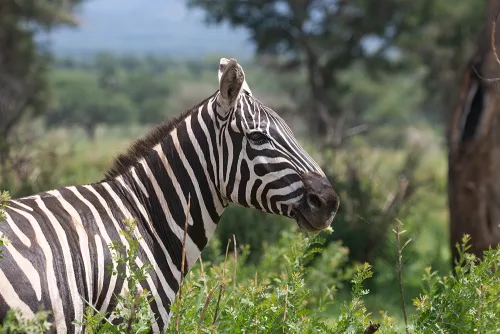
A zebra in Lake Mburo National Park.
Lake Mburo is the only park in Uganda where impala live naturally, which is exciting for wildlife fans hoping to see every East African species. More than 5,000 Burchell's zebra inhabit the park's open savannahs, moving calmly as if they know they are safe. Each zebra has a stripe pattern as unique as a fingerprint, and your guide will show you how to tell different family groups apart.
Rothschild's (Nubian) Giraffe: A Conservation Story
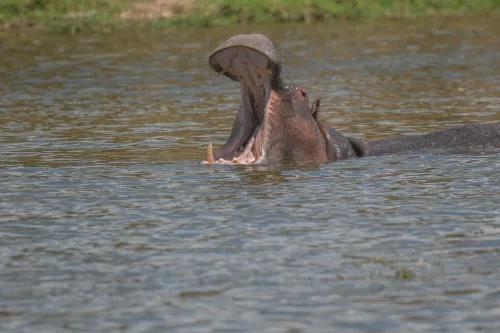
Around 300 hippos live in Lake Mburo, and you can hear their deep breaths during a dawn boat cruise. Nile crocodiles lie still along the clay banks. African fish eagles call out across the water. This is the Africa you picture, seen at a pace that lets you really take it in.
Private Birding: One of Africa's Most Exclusive Shoebill Experiences
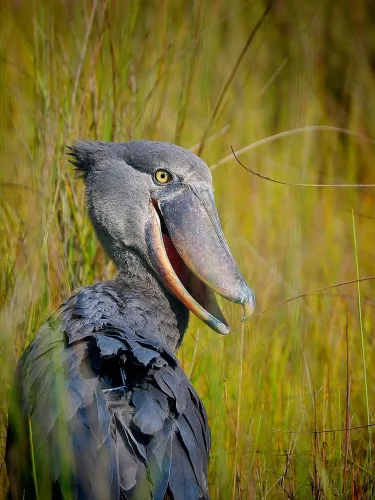
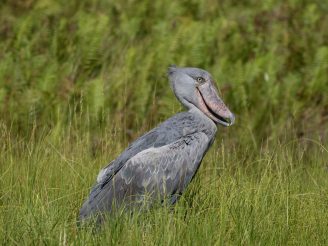
A shoebill in Lake Mburo National Park
Lake Mburo is a must-visit for dedicated birders. The park is home to more than 315 bird species, found in habitats ranging from papyrus swamps to open acacia and rocky ridges. Each area has birds you will not see anywhere else in Uganda.
Bird Uganda’s senior birding specialists are some of the most experienced guides in East Africa. Because we have access to private marsh areas, you can see the Shoebill—an ancient, striking, and very photogenic bird—that most visitors to Uganda never get to encounter.
This is not just a chance sighting from a public area. Instead, you get a private, guided experience with one of Africa’s most sought-after birds, designed to protect the Shoebill and make your visit unforgettable.
Signature Species for the Serious Birder
The park’s acacia woodland is one of the top spots in East Africa to see birds like the Red-faced Barbet, Rüppell’s Starling, Black-throated Barbet, and Bare-faced Go-away Bird. In the papyrus swamps, you can find specialists such as the Papyrus Gonolek, Papyrus Yellow Warbler, and the African Finfoot. Spotting an African Finfoot from a private boat is a rare and memorable experience.
Between November and April, migratory birds join the local species, and resident birds display their brightest breeding colors.
Before you arrive, Bird Uganda offers high-quality optics, detailed site maps, and a personalized list of target species. After your trip, your guide will create an annotated checklist for you to remember your experience.
"The Shoebill alone is worth the journey. Everything else is a gift." - Michael, Canadian Birder
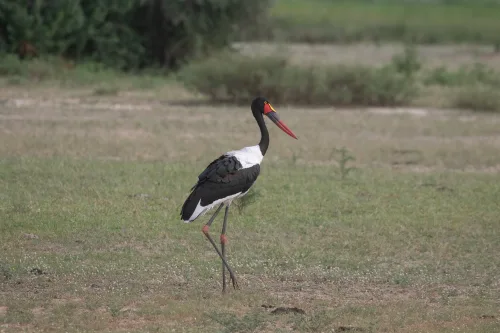
A saddle billed stork in Lake Mburo National Park.
Exclusive Activities & Safari Experiences
Horseback Safari
Lake Mburo is the only national park in Uganda where you can explore on horseback. Many visitors say it’s one of Africa’s best wildlife experiences. Zebras often come close to horses, something they rarely do with vehicles. Impalas may stand their ground as you pass. Riding offers a quiet approach, a higher vantage point, and the unique feeling of being on a horse, making it a classic safari with all the comfort and safety you’d expect.
Guided Walking Safari
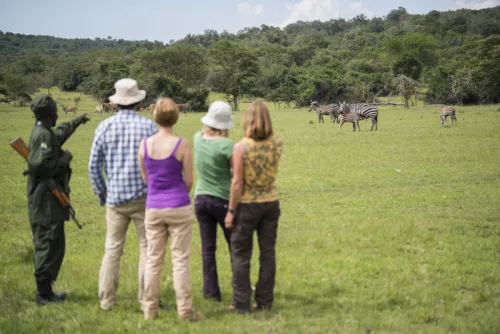
Since Lake Mburo has no lions or elephants, it is one of the rare places in Africa where you can really walk through the wild. With armed rangers from the Uganda Wildlife Authority and a Bird Uganda naturalist, these walking safaris let you explore the landscape up close. You might spot buffalo tracks in the red clay, catch the scent of a leopard, or see the neat shape of a weaverbird's nest. Walking lets you notice details that you might miss on other safaris.
Tourists on a guided nature walk in Lake Mburo National Park.
Night Game Drive
The bush transforms after dark, becoming almost unrecognizable. On our night game drives, skilled trackers and powerful spotlights help you spot the animals that are active at night. You might see leopards on the hunt, hyenas moving quietly among the acacias, bush babies with their large, shining eyes clinging to branches, and genets weaving through the undergrowth. The drives begin at 7 PM and end with a return under a sky full of stars, far away from city lights.
Private Boat Cruise
Enjoy a private boat cruise on Lake Mburo, set up just for your group. Watching wildlife here feels peaceful and almost meditative. The water stays calm, hippos linger close by, and the early sunlight glows on the far shore. Our guides know the birds well and keep a gentle pace, so you have plenty of time for photos, quiet moments, and taking it all in—something you won’t find on a group tour.
Where to Stay
Mihingo Lodge — The Park's Definitive Luxury Address
Twelve unique tented suites sit on a dramatic rocky outcrop within a private 97-hectare concession beside the park. Each suite combines classic East African safari style with the comfort you’d expect, offering a private deck, outdoor shower, and direct views of the savannah where giraffes wander at dusk. The infinity pool is one of Uganda’s most photographed, and for good reason. It faces directly into the wilderness.
Mihingo also serves as the base for horseback safaris, which are run with high standards for both animal welfare and rider safety. We team up with Mihingo’s staff to offer specialist birding guides alongside the lodge’s safari program, making the experience smooth and enjoyable.
Kigambira Safari Lodge
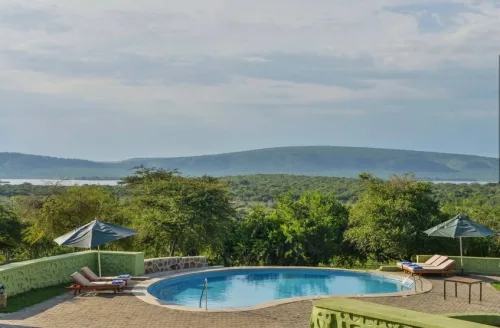
A swimming pool at Kigambira Lodge with a beautiful view of the Lake Mburo National Park landscape.
Kigambira is a more intimate choice, with buildings inspired by the area’s volcanic rock and old woodlands. From its high vantage point, you can see sweeping views of the park. With only a few guests at a time, the lodge feels exclusive in a way bigger places cannot offer. Bird Uganda’s experts also team up with the lodge guides to make birdwatching even better for every visitor.
Practical Intelligence for the Discerning Traveller
Getting There
Lake Mburo is 240 kilometres from Kampala along a well-maintained highway. The 3.5-hour private transfer takes you through countryside that becomes more dramatic as you go, making the journey an adventure in itself. If you are also planning to visit Bwindi Impenetrable National Park for gorilla trekking, Lake Mburo is right on the way. It is a natural and highly recommended place to stop overnight, turning a simple transfer into a memorable part of your trip.
Charter flights from Entebbe International Airport to Mbarara Airstrip take about one hour. From there, it is a 45-minute drive to the park. Bird Uganda takes care of all the travel arrangements and ensures everything meets your expectations.
When to Visit
The best time to see wildlife is during the long dry season from June to August, when animals gather at water sources and the grass is low, making them easy to spot. December to February is also a good time for game viewing. If you are interested in birdwatching, especially for migratory birds and those in their colorful breeding plumage, November through April is ideal. At Bird Uganda, we offer detailed seasonal advice during our pre-travel consultations, making sure our tips match your interests.
What to Bring
Wear neutral or earth-toned clothes for game activities, and pack some lightweight layers for cooler mornings. Bring good binoculars, such as 8x42 or 10x42, and a camera with at least a 500mm lens if you want to photograph wildlife. If you need specialist equipment like spotting scopes or field guides, Bird Uganda can provide them on request.
Plan Your Lake Mburo Experience
Lake Mburo might not be the first park you think of visiting, but it’s often the one people remember most. If your Uganda trip includes Bwindi or Kibale, don’t miss out on Lake Mburo—it’s one of the highlights.
Bird Uganda Safaris creates custom Lake Mburo trips for luxury travelers with special interests in wildlife, photography, or birding. Our Senior Birding Specialists offer a free pre-trip consultation to talk about your goals, answer questions about lodges and logistics, and start planning an experience just for you.