
Western Uganda is home to Kibale National Park, a lush rainforest at the base of the Rwenzori Mountains. Covering 766 square kilometers, it is known as the primate capital of the world. Thirteen primate species live here, including chimpanzees whose calls fill the forest at dawn. Visitors who watch quietly can see behaviors that remind us of our own evolutionary history.
Kibale became a national park in 1993, though it has been protected in some way since 1932. It is one of East Africa’s key conservation areas and has more than 1,200 East African chimpanzees—the largest group in Uganda and one of the easiest to see in Africa. The park is also home to over 375 bird species, rare forest mammals, and an ecosystem that has lasted for thousands of years. Visitors can explore one of Africa’s richest natural environments here.
Location and Geography
Kibale National Park is located in western Uganda and ranges between 1,100 meters and 1,600 meters in elevation. The park sits approximately 26 kilometers southeast of Fort Portal city and 326 kilometers from Kampala, positioned in the districts of Kabarole, Kamwenge, Kyenjojo, and Kasese. To the west, the snow-capped Rwenzori Mountains create a dramatic backdrop, while the park forms a 180-kilometer wildlife corridor with Queen Elizabeth National Park to the south, ensuring the free movement of animals between these two protected areas.
Most of Kibale is covered by moist evergreen and semi-deciduous forest, but the landscape changes in different areas. It is one of the last places in eastern Africa with both lowland and montane forests, including the last large area of pre-montane forest. The north and center have dense forest on the Fort Portal plateau, while the south becomes woodland and grassland as the land slopes down to the rift valley.
Kibale has a tropical climate, with average temperatures between 14 and 27 degrees Celsius. There are two rainy seasons: March to May and September to November. The northern part of the park is the wettest, getting up to 1,700 millimeters of rain each year.
A Century of Conservation: The Park’s History
The park was gazetted in 1932 and formally established in 1993 to protect a large area of forest that had previously been managed as a logged forest reserve. During the colonial era, the British Crown Forest Reserve permitted selective logging of valuable hardwood species, and timber extraction intensified in the 1950s to supply the Kilembe Copper Mine near Kasese. Species like mahogany, satinwood, and Elgon olive were heavily harvested, and exotic pine and cypress plantations were established in some areas.
Changing Kibale from a logging area to a national park shifted the focus from using resources to protecting nature. In 1996, the Uganda Wildlife Authority took over management, bringing in conservation experts, anti-poaching efforts, and tourism development. Now, the park works to protect endangered species, support research, offer sustainable tourism, and help local communities through revenue sharing.
The Conservation Journey
Kibale’s conservation history follows a common pattern in Africa. It has moved from colonial resource use to modern ecosystem protection, from keeping local communities out to sharing benefits with them, and from passive management to active research and flexible conservation strategies.
When logging was allowed, selective cutting reduced the canopy in some areas and changed the forest’s makeup. Still, the forest has shown resilience, and many logged spots have grown back with a variety of native trees. Studies show that keeping out fire and letting wildlife spread seeds can help even damaged grasslands return to forest over time.
Today, threats include conflicts between people and wildlife, as elephants and other animals sometimes raid crops near the park. Growing populations increase the need for land, firewood, and other resources. Illegal activities like poaching and logging still happen, even with ranger patrols. Climate change, with changing rainfall and rising temperatures, also puts the forest at risk.
Conservation in Kibale uses several approaches. Anti-poaching patrols help stop illegal hunting and resource use. Community programs share benefits with locals, giving 20 percent of park entrance fees to nearby districts for schools, health centers, water, and other projects. Jobs in tourism, guiding, and lodges also give people reasons to support conservation.
Research is very important in Kibale. Long-term studies give managers the information they need to make good decisions. The Makerere University Biological Field Station hosts many research projects on primates, forest ecology, disease, and conservation. This scientific work means decisions are based on facts, not guesses.
Because humans and chimpanzees are so closely related, disease transmission is a serious risk. To reduce this, strict rules limit contact, require health checks before trekking, and make mask-wearing mandatory during visits to help prevent the spread of respiratory diseases.
The Chimpanzees: Our Closest Relatives
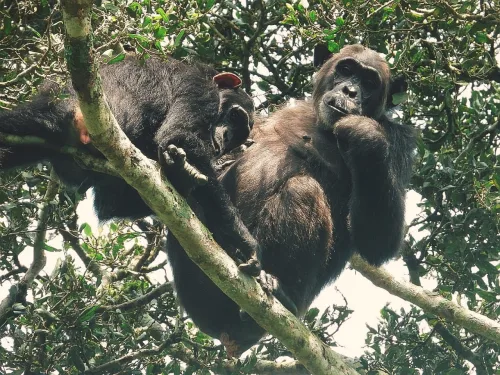
Chimpanzees share about 98-99 percent of our DNA, making them our closest genetic relatives.
Kibale is home to one of Uganda’s largest wild chimpanzee populations, with over 1,500 individuals living in at least 12 different communities.
Five of these groups are used to people for research or tourism, and the Kanyanchu community has been welcoming visitors since 1993.
The Kanyawara community, with 50 to 60 chimpanzees in the park’s northwest, has been studied by the Kibale Chimpanzee Project since 1987. Started by Dr. Richard Wrangham, this research has greatly expanded what we know about chimpanzee behavior, ecology, and social life. The Ngogo community, located in the center of the park, is especially notable for its size—nearly 200 chimpanzees—making it one of the largest groups in the world.
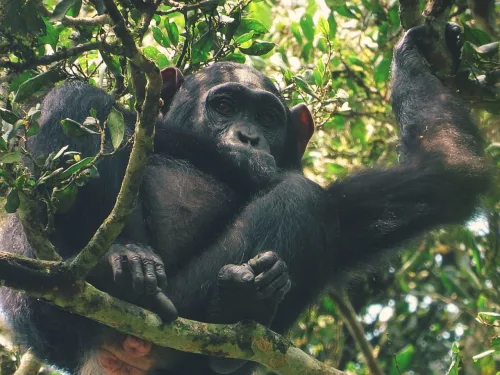
Chimpanzees are very social and live in groups led by a dominant alpha male. Males usually gain power by building alliances with others who support them. These groups show many behaviors similar to humans: they use tools to get termites and crack nuts, hunt together, form alliances, comfort each other, and even fight with neighboring groups.
Adult male chimpanzees weigh between 35 and 70 kilograms and stand about 1.5 meters tall. Females weigh between 26 and 50 kilograms. Their long arms, made for climbing, stretch about one and a half times their height. Chimpanzees have no tails, dark fur, and hairless faces, fingers, palms, and soles. In the wild, they live 40 to 50 years. Females usually have babies about once every five years, after a long period of caring for their young.
Tracking chimpanzees in Kibale’s forest is a special experience. With a sighting rate of over 90 percent, visitors are very likely to see these smart primates in the wild. Watching a mother hold her baby, young chimps play, or an alpha male show his strength by charging and shaking branches gives visitors a real sense of connection with them.
A Primate Paradise: Beyond Chimpanzees
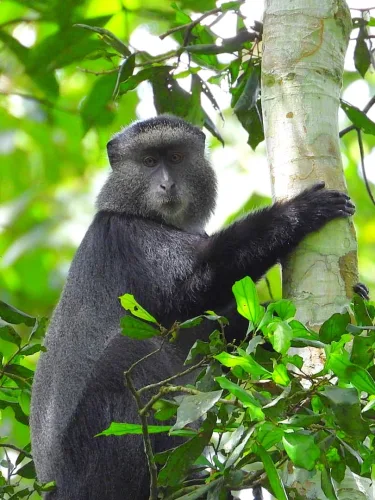
Chimpanzees may get most of the attention, but Kibale is known as Africa’s primate capital because of its amazing variety. The park has 13 primate species, including endangered red colobus monkeys and rare L’Hoest’s monkeys. Nowhere else in Africa has such a mix, so visitors can often see several species during one walk.
The Ugandan red colobus, an endangered species, lives in groups that eat mostly leaves high in the trees. Their reddish coats and acrobatic moves make them popular with primate watchers. Black-and-white colobus monkeys, known for their long white tails and capes, travel in family groups and their deep grunts can be heard throughout the forest.
L’Hoest’s monkeys are shy and hard to find, usually staying on the forest floor or in the lower branches. They have white beards and chestnut-brown fur, and move quietly in small family groups, so spotting them is a real treat. Grey-cheeked mangabeys, with their loud whooping calls and long tails, search for food in the middle levels of the forest, often alongside other monkeys.
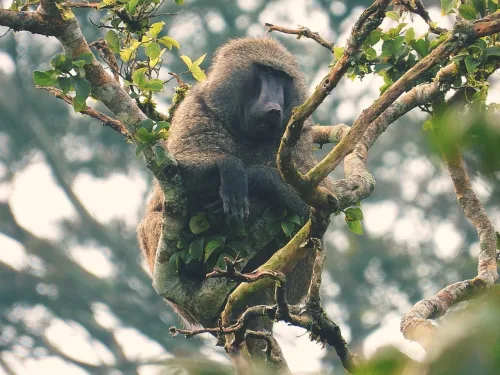
Blue monkeys, with blue-grey fur, live high up in the trees and eat fruits and insects. Red-tailed monkeys, named for their bright copper tails, are playful and noisy in the canopy. Olive baboons, the biggest primates in Kibale after chimpanzees, move in groups through clearings and along roads, and their busy social lives are always interesting to watch.
Vervet monkeys live in open spaces and along the forest edges. At night, primates like bushbabies and pottos come out and can be seen during night walks. Kibale’s location, where East and West African forests meet, allows so many different species to live here.
Birdwatching and Other Wildlife
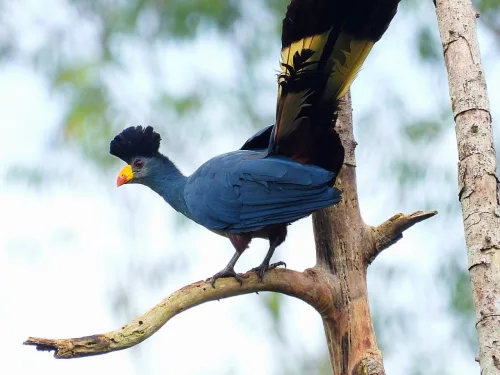
Kibale National Park has over 375 bird species, making it one of the best places for birdwatching in Uganda. The forest is home to many Albertine Rift endemics and rare forest birds that are hard to find elsewhere in East Africa. Birders especially look for the African pitta and green-breasted pitta, both colorful ground birds that are hard to spot.
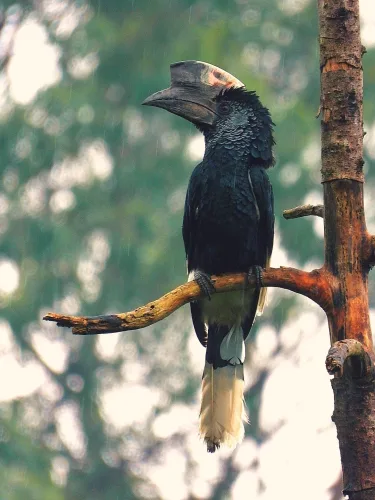
The great blue turaco, with its bright blue and green feathers and unique crest, is a well-known sight in the treetops. African grey parrots, famous for their smarts and ability to mimic sounds, fly in groups between feeding and sleeping spots. Several hornbill species, like the black-and-white casqued hornbill, fill the forest with their calls. Many barbets, tinkerbirds, and sunbirds add color and life to the lower forest and edges.
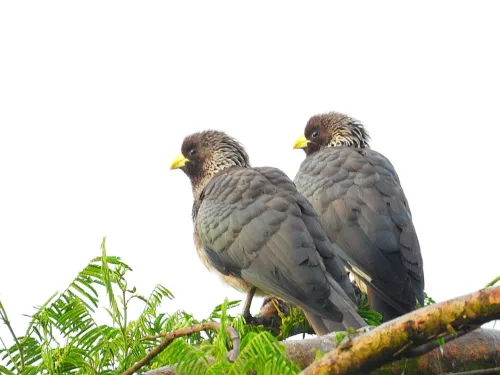
Special forest birds such as the yellow-spotted nicator, western nicator, and different robin-chats live in the thick undergrowth. Raptors like crowned eagles hunt in the treetops, while birds like the forest ground thrush search for food on the forest floor. The mix of dense forest and grassland edges helps support this wide variety of birds.
Besides primates and birds, Kibale is home to over 120 other mammal species. Forest elephants, which are smaller and harder to see than savannah elephants, travel in small family groups. These elephants move between Kibale and Queen Elizabeth National Park using a wildlife corridor.
African buffalo also live here, mostly in forest clearings and along the edges, though there are fewer than in savannah parks.
Antelopes in Kibale include red and blue duikers, which feed in the lower forest, bushbucks that prefer the edges, and the rare sitatunga found in swamps. Giant forest hogs, the largest wild pigs, dig for food in clearings. Bushpigs and warthogs also live here. Leopards are rarely seen but sometimes leave tracks on forest trails at night. Many small mammals, like mongooses, otters, and rodents, are also part of the ecosystem.
The Trekking Experience: What to Expect
Chimpanzee tracking walks take place every day at 8:00 AM, 11:00 AM, and 2:00 PM, starting at the Kanyanchu Visitor Centre. Visitors first register and attend a briefing where rangers explain chimp behavior, safety, and park rules. Each group has up to six people, and everyone must be at least 16 years old.
Treks usually last two to five hours, depending on where the chimpanzees go, the weather, and the terrain. Rangers stay in touch with trackers by radio to find the chimps, which makes sightings more likely. Once the group finds them, visitors spend an hour watching the chimpanzees eat, groom, play, rest, and interact.
The forest can be flat or steep and muddy, especially when it rains. Waterproof boots, long pants for protection, and rain gear are a must. Wearing neutral colors helps avoid scaring wildlife. Visitors should also bring water, snacks, insect repellent, and cameras with suitable lenses for taking photos in the forest.
If you want a deeper experience, the Chimpanzee Habituation Experience lets you spend a whole day with a semi-habituated group. You’ll see their daily routines, from building nests in the morning to settling in at night. This activity needs more physical fitness and stamina.
You need permits for both regular trekking and the habituation experience. Standard trekking permits for foreign visitors cost about $250, while habituation permits are more expensive.
It’s important to book in advance through the Uganda Wildlife Authority or a licensed tour operator, especially during busy seasons.
Exploring the Forest: Other Activities
Kibale has many activities besides chimpanzee trekking. Guided nature walks on marked trails let you see smaller primates, birds, butterflies, and learn about medicinal plants and forest ecology. Rangers also explain how local people use forest plants, help with tree identification, and talk about the complex relationships in the forest.
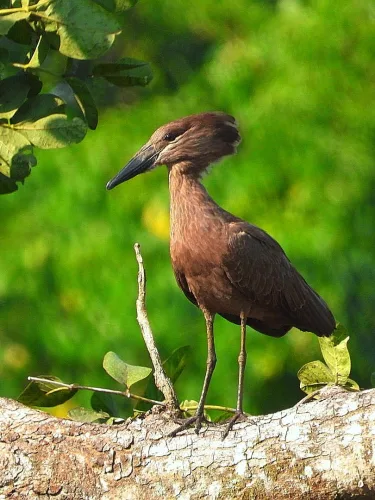
The Bigodi Wetland Sanctuary, just outside the park, is run by the local community and adds to the park’s activities. It has 138 bird species, including the great blue turaco and the rare papyrus gonolek. A 4.5-kilometer boardwalk goes through the wetland, with platforms for watching birds and primates. Eight primate species visit from the nearby forest, and animals like sitatungas, bushbucks, and otters live in the swamps.
Bigodi is a good example of community-based conservation, managed by the Kibale Association for Rural and Environmental Development. Money from the sanctuary helps fund local schools, health centers, and women’s groups. Visitors can join wetland walks and community tours, visit traditional healers, watch coffee-making, and see how locals make crafts from swamp materials.
Night walks, when allowed, show a different side of the forest. Bushbabies jump through the trees, their big eyes shining in the light. Pottos move slowly in the canopy, and animals like civets, genets, and other night creatures come out of hiding. The nighttime sounds, from nightjars calling to chimpanzees hooting in their nests, make the forest feel mysterious.
Special birding trips focus on finding rare forest birds and Albertine Rift endemics. Expert guides help visitors spot hard-to-find species like the African pitta during its short breeding season or the green-breasted pitta in thick undergrowth. Early morning is the best time, as birds are most active and noisy then.
Meeting local communities around the park gives visitors a look at traditional ways of life, farming, and how people relate to the forest. Visitors see how these communities benefit from conservation, but also learn about the challenges they face, like wildlife sometimes raiding crops or threatening livestock.
The crater lakes region nearby has beautiful volcanic lakes surrounded by forests and farms. It’s a great place for hiking and birdwatching. Many visitors add a trip to these lakes to their Kibale visit to enjoy the different landscapes of western Uganda.
Practical Visitor Information
You can reach Kibale by road or air. The drive from Kampala is about 326 kilometers on the Kampala-Fort Portal highway and takes five to six hours. From Fort Portal, it’s just an hour’s drive to the park. There’s also a longer route through Mbarara, which lets you stop at Lake Mburo and Queen Elizabeth National Parks.
There are no airstrips inside the park, but you can take charter flights to Kasese Airstrip, about two hours away by road, or to Fort Portal. Flights from Entebbe International Airport or Kajjansi Airstrip take about one to one and a half hours, which saves time for visitors with busy schedules.
You’ll find a range of places to stay, from budget camping and guesthouses to mid-range lodges and luxury hotels. Near Kanyanchu, you can choose Primate Lodge inside the park, Kibale Forest Camp, or Chimpanzee Guest House. For more upscale stays, Kyaninga Lodge and Ndali Lodge have great views of crater lakes and top amenities. Crater Safari Lodge offers luxury in a beautiful forest setting.
The best trekking conditions are during the dry seasons, from June to September and December to February. Trails are less muddy, plants are lower so it’s easier to spot wildlife, and the weather is more predictable. These are also the busiest times, so permits and rooms are in high demand. The wet seasons, from March to May and October to November, bring thick vegetation, great birdwatching, and fewer tourists, but trekking can be harder on muddy trails.
Park entry fees are different for foreign visitors, East African residents, and Ugandan citizens. Chimpanzee trekking permits are separate from the general entry fee and need to be booked ahead of time. Activities like guided walks, night walks, and trips to Bigodi Wetland Sanctuary also have extra charges. Most lodges and tour operators can help arrange all permits and activities as part of your safari package.
Health tips: Kibale is in a malaria zone, so take malaria prevention medicine. You may need a yellow fever vaccination certificate to enter Uganda. Make sure you’re healthy before chimp trekking, since passing diseases to chimpanzees is a serious risk. It’s also wise to have travel insurance that covers medical evacuation.
You can combine Kibale with other Ugandan destinations for a full safari experience. Many people pair chimpanzee trekking with gorilla trekking in Bwindi Impenetrable National Park, wildlife viewing in Queen Elizabeth or Murchison Falls National Parks, and trips to the Rwenzori Mountains. This route through western Uganda highlights the country’s many ecosystems and wildlife.
Conclusion
Kibale Forest National Park is more than just a great place to see wildlife. It shows how people and nature can live together in a sustainable way. The park protects over 1,500 chimpanzees, supports research, and helps local communities, making it a model for conservation.
For visitors, tracking chimpanzees in the rainforest is a special experience that connects us to our evolutionary past and to these amazing animals. As one of Africa’s top primate habitats and a hotspot for unique species, protecting Kibale is important for Uganda and for the world. Its ancient trees, rich wildlife, and the chimpanzees that live here deserve our efforts to keep them safe for future generations.