
The shoebill is one of Africa's most fascinating birds, attracting wildlife lovers and birdwatchers from all over the world to Uganda's wetlands. Its large, shoe-shaped bill, ancient look, and still hunting style make it unforgettable to see. With hundreds of shoebills living in Uganda, the country is one of the best places to watch this rare species in the wild.
Key Takeaways
- Best viewing locations: For the best chance to see shoebills, visit Mabamba Bay Wetland near Entebbe. It is the easiest place to reach and offers the most reliable sightings. Ziwa Rhino Sanctuary and the Albert Delta in Murchison Falls National Park are also great options, and you can enjoy other wildlife there too.
- Optimal timing matters: Try to visit early in the morning, between 6:00 and 9:00 AM, when shoebills are most active. Plan your trip during the dry seasons, from December to February or June to September, because lower water levels make it easier to spot the birds.
- A prehistoric wonder: The shoebill is a remarkable bird, growing up to 152 centimeters tall with a wingspan between 230 and 260 centimeters. Its large, shoe-shaped bill and unique "freeze and seize" hunting style make it one of the most fascinating birds to watch in Africa.
- Conservation through tourism: There are only about 5,000 to 8,000 shoebills left in the world, and they are considered Vulnerable. By choosing responsible tourism, you help support conservation and give former hunters new roles as guides and protectors of these amazing birds.
- Come prepared: Be sure to bring closed shoes, long pants, insect repellent, binoculars, and a camera with a zoom lens for the best experience. Booking a trip with experienced local guides who know the nesting sites can also help you spot shoebills more easily.
 What Makes the Shoebill So Special?
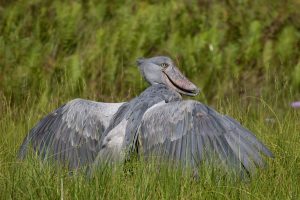
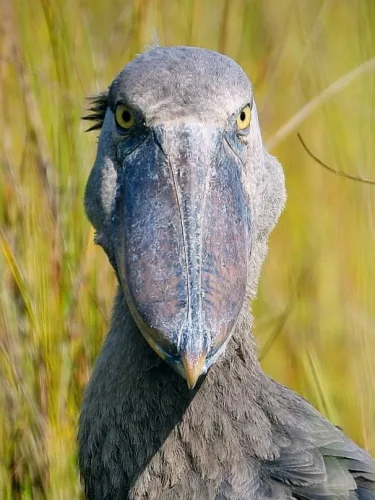
The shoebill (Balaeniceps rex) stands out right away. It grows between 110 and 140 centimeters tall, about as tall as an average adult, and some can reach up to 152 centimeters.
Its wingspan is also impressive, stretching 230 to 260 centimeters, which is about as wide as a small car.
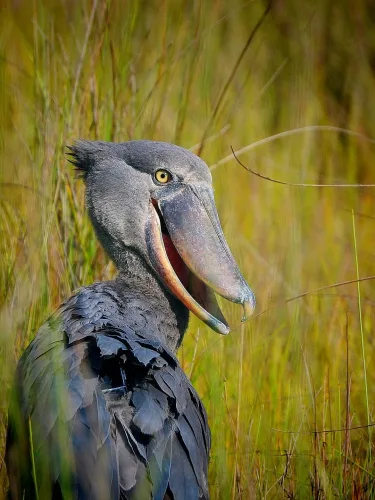
The shoebill's bill can be up to 24 centimeters long and 20 centimeters wide, with sharp edges that help it catch prey. This unusual, yellowish bill with dark spots is one of the largest among birds.
Adult shoebills are mostly blue-grey, while young ones are browner. Their dark grey heads, black-tipped wings, and big yellow or gray-white eyes give them a prehistoric look.
Besides its unique looks, the shoebill has interesting behaviors. It uses a "freeze and seize" hunting style, staying still for a long time before striking quickly. Shoebills hunt lungfish, tilapia, catfish, and sometimes watersnakes, Nile monitors, or even baby crocodiles. They can catch prey up to 99 centimeters long, but usually eat fish between 15 and 50 centimeters.
The International Union for Conservation of Nature lists the shoebill as Vulnerable, with only 5,000 to 8,000 left. Their survival is threatened by habitat loss, hunting, human activity, and illegal trade. This makes responsible wildlife tourism more important than ever for their protection.
Best Places to See Shoebills in Uganda
Mabamba Bay Wetland
Mabamba Bay is Uganda's easiest and most dependable place to see shoebills. About 12 kilometers west of Entebbe City on the northern shore of Lake Victoria, this large wetland covers more than 2,400 hectares filled with papyrus and water lilies. Since 2006, it has been a Ramsar site and is home to over 300 bird species, with the shoebill being the main highlight.
Local communities have changed how they interact with these birds. In the past, people hunted shoebills, but now the birds are at the center of ecotourism efforts. This change has brought income to the area and helped protect important habitats, balancing economic growth with conservation.
There are two main ways to get to Mabamba Bay. The most scenic is a 45-minute to one-hour motorized canoe ride from Nakiwogo Landing Site in Entebbe, which gives you great views of Lake Victoria and plenty of birdwatching along the way. You can also drive from Entebbe via the Kawuku-Nakawuka road, which takes about an hour and 15 minutes, but road conditions can change with the weather, especially when it rains.
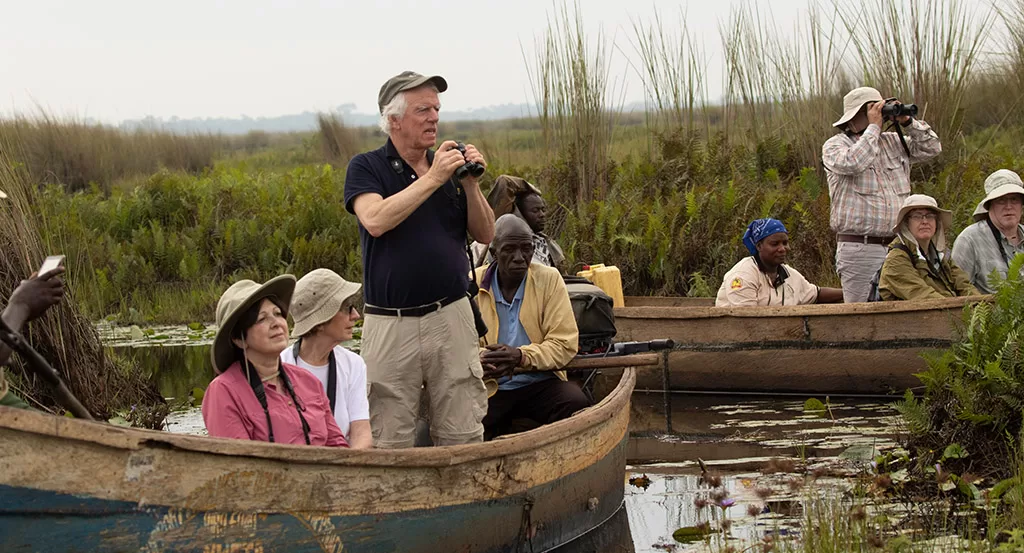
The best time to see shoebills is early in the morning, between 6:00 and 9:00 AM, when the birds are most active. Local guides take visitors through the swamps in canoes, moving through papyrus channels and looking for the unique shape of a shoebill. Most people spot at least one bird during their trip here.
Ziwa Rhino Sanctuary (Lugogo Swamp)
Ziwa Rhino Sanctuary is about 176 kilometers north of Kampala on the Kampala-Gulu highway. Here, you can track rhinos and also look for shoebills in Lugogo Swamp, which is a great spot for these birds. Sometimes, visitors have seen up to 11 shoebills in one trip.
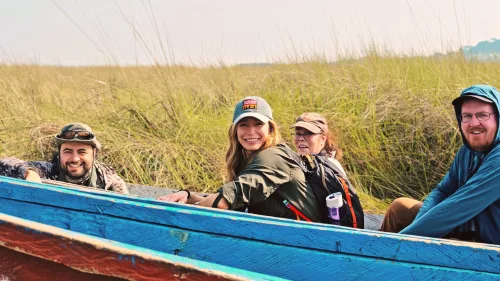
The shoebill trek at Ziwa starts at 6:00 AM, so visitors need to stay overnight because the gates open at 7:30 AM. The four-hour canoe trip through the swamp at sunrise is a memorable experience. As the sun rises, you can see water birds taking off and shoebills starting to hunt.
Ziwa's experienced rangers know exactly where shoebills nest and feed in the swamp. They guide visitors through floating plants, showing not only shoebills but also other wildlife in the wetland. The sanctuary charges separate fees for park entry (which covers rhino trekking) and for the shoebill trek, with different prices for international visitors, East African residents, and foreign residents.
This spot is great for visitors who want to see as much wildlife as possible in one trip. You can see endangered white rhinos and shoebills on the same visit, which is perfect if you have limited time.
Murchison Falls National Park (Albert Delta)
The Albert Delta in Murchison Falls National Park is another top place to see shoebills. Where the Victoria Nile meets Lake Albert, large wetlands make perfect homes for these birds. The best way to find shoebills here is by taking a boat safari, especially early in the morning or late in the afternoon.
While on the boat, you can look for shoebills and also see elephants cooling off by the river, hippos in the shallow water, big Nile crocodiles on the mudbanks, and many other animals living in this rich area. Seeing shoebills along with other wildlife makes Murchison Falls National Park a great choice for a full safari experience.
The best time to see shoebills in the Albert Delta is during the dry seasons, from January to March and June to September. Lower water levels bring fish together, making it easier to spot shoebills. Local guides know where to look and understand the birds' habits, which helps visitors see them more often.
At Bird Uganda Safaris, we offer packages that include both boat trips into the delta and game drives in Murchison Falls National Park. This way, you can enjoy Uganda's savannas and wetlands in one trip. On the park's northern bank, you'll find places to stay for every budget, from campsites to luxury lodges, all with access to delta boat safaris.
Other Notable Locations
There are other places in Uganda where you can try to see shoebills, but these spots are visited less often and you might not always be successful:
The Ishasha Sector of Queen Elizabeth National Park, known for its tree-climbing lions, also has wetlands where shoebills sometimes show up. Makanaga Swamp and Lwera Swamp are good habitats for shoebills, but they don't have the same tourism facilities as Mabamba Bay or Ziwa. Toro-Semliki Game Reserve and Semuliki National Park in western Uganda also have wetlands, but seeing shoebills there is less certain. Lake Mburo National Park sometimes has shoebills in its swamps, but they aren't the main attraction.
These other locations are good for adventurous birdwatchers who want to explore less-visited places or combine shoebill viewing with other activities. But if it's your first time looking for shoebills, it's best to start with Mabamba Bay, Ziwa, or Murchison Falls, where you're more likely to see them.
When to Visit Uganda for Shoebill Viewing
You can look for shoebills in Uganda year-round, but some seasons are better than others. The dry seasons, from December to February and June to September, are usually best.
During these months, lower water levels bring fish together, making it easier for shoebills to hunt and for visitors to spot them. Roads and paths to the wetlands are also in better shape during the dry season.
The wet seasons, from March to May and October to November, are a bit different. Higher water levels can spread out the shoebills, but they are still around and active.
Some people even prefer visiting during the wet season because there are fewer tourists, making wildlife encounters more personal, and the green scenery is great for photos.
No matter the season, the best time to see shoebills is early in the morning, from 6:00 to 9:00 AM, when they are most active and hunting before it gets too hot. Watching the sunrise over Uganda's wetlands, with mist and birds in the air, is a special experience that goes beyond just spotting shoebills.
Planning Your Shoebill Viewing Experience
What to Bring
Being well prepared makes your shoebill trip much better. Wear closed shoes because you might have to step in mud or water when getting into canoes. Long pants help protect you from insects and plants. Bring insect repellent, since wetlands have mosquitoes and other bugs. Also, take enough drinking water, as trips can last several hours.
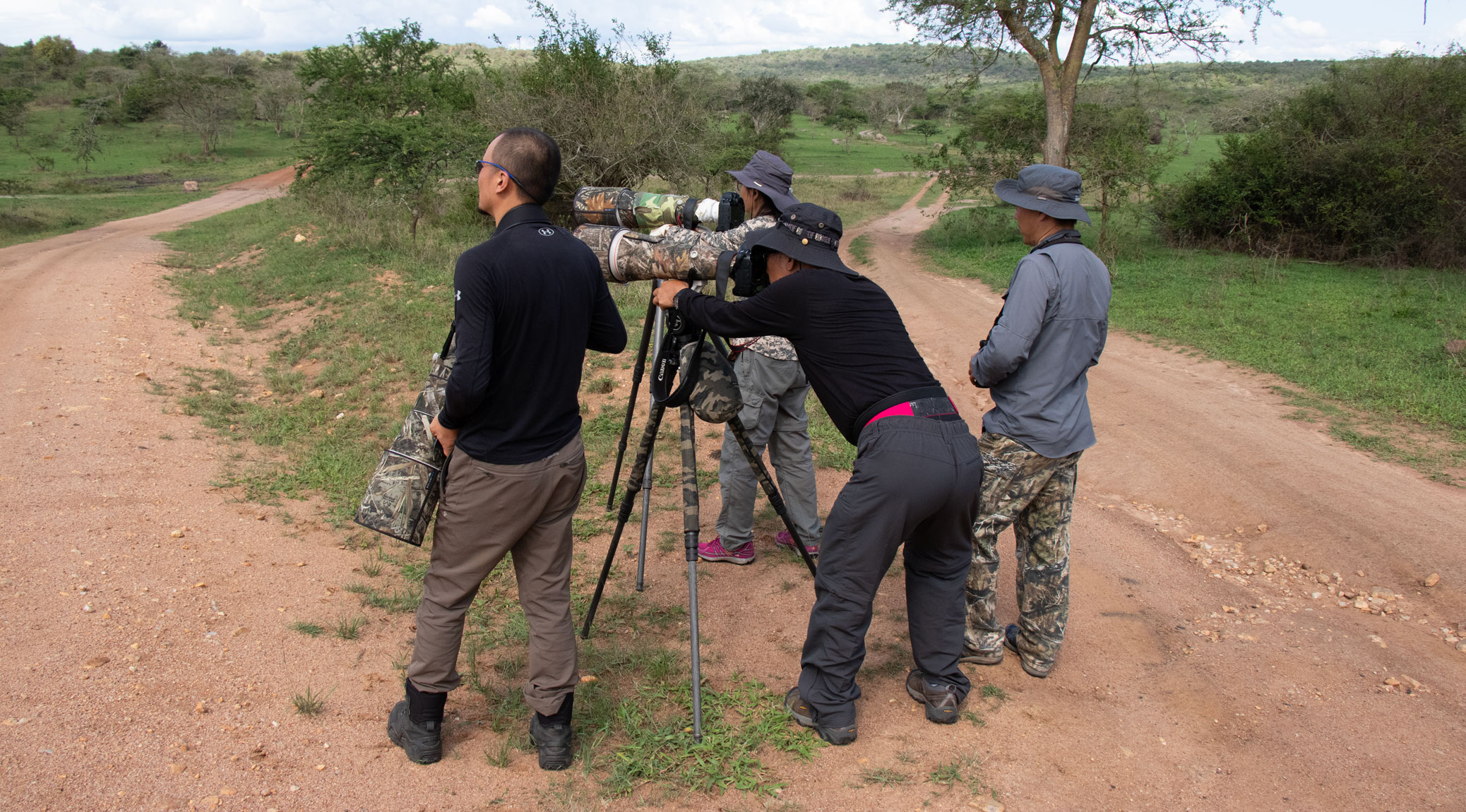
A good camera with zoom lets you take close-up photos of shoebills without getting too near. Binoculars help you see their feathers and behavior from a distance. Don't forget sunscreen and a hat to protect yourself from the strong sun, especially on boat rides where there's little shade.
Guided Tours vs. Independent Visits
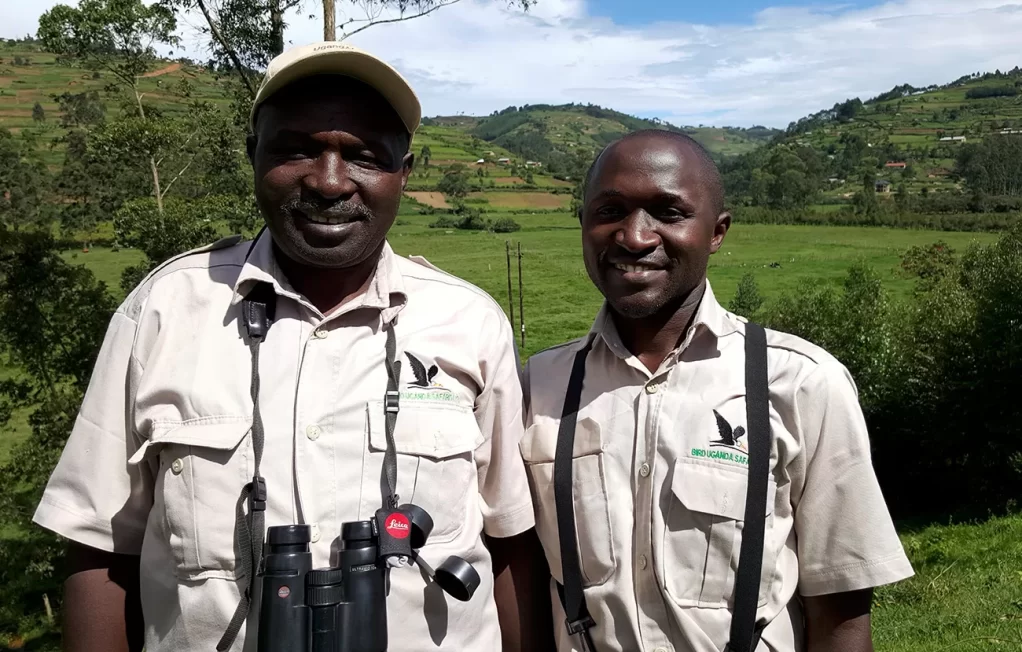
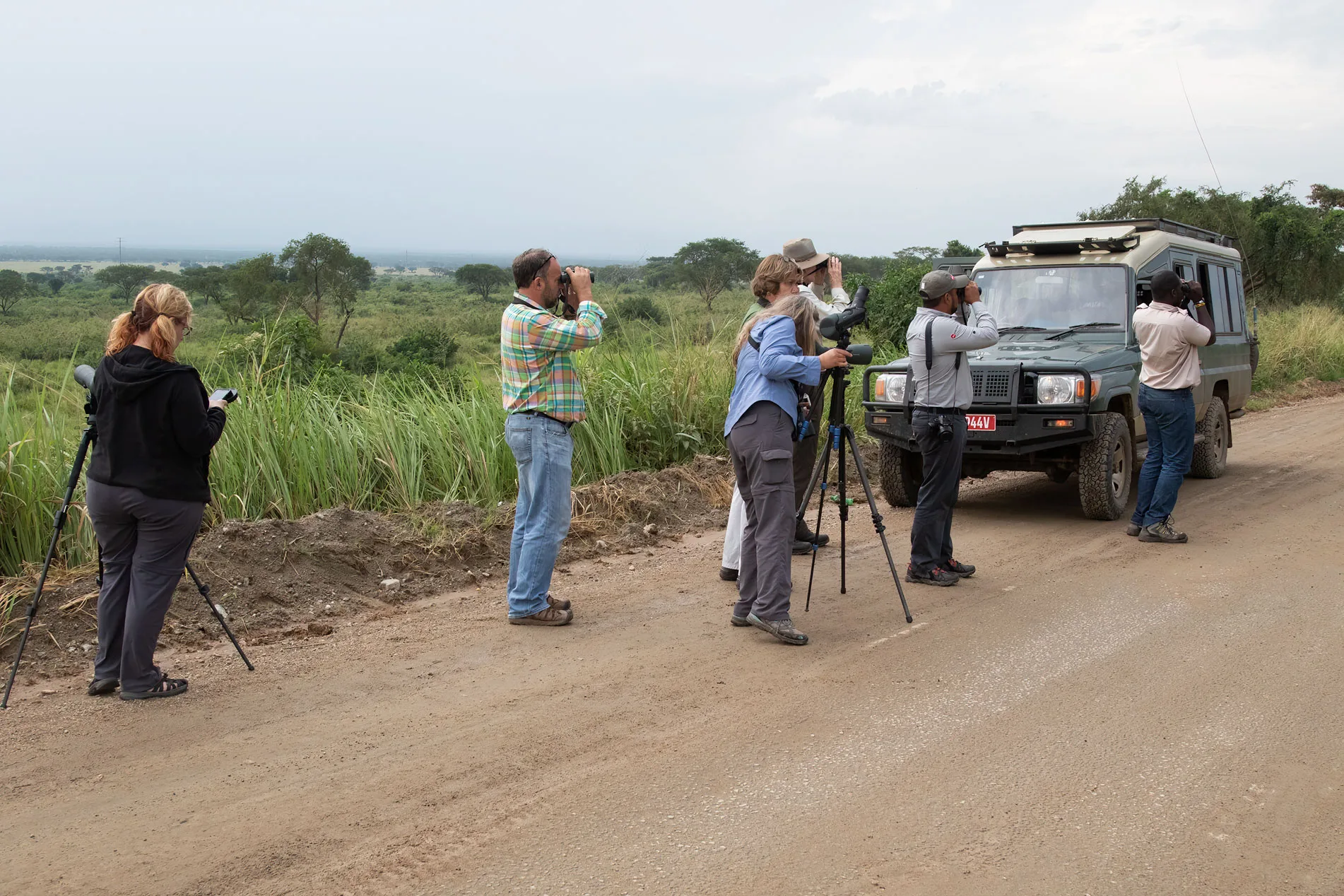
You can visit some shoebill spots on your own, but going with a guide makes it much more likely you'll see the birds. Local guides know where shoebills are nesting and feeding, how the weather affects them, and the best ways to watch without disturbing them. They also share interesting facts about the birds, conservation, and the wetlands.
We offer packages that include shoebill viewing along with other top Uganda attractions. Some trips combine Mabamba Bay with gorilla trekking in Bwindi Impenetrable National Park, letting you see everything from tiny primates to huge birds. Other packages mix shoebill viewing at Murchison Falls with game drives, boat trips to the falls, and chimpanzee tracking in Budongo Forest.
Photography Tips
Taking photos of shoebills can be both challenging and rewarding. Since they often stand still for a long time, you have time to set up your shot, but the thick wetlands can make backgrounds tricky. The best light is early in the morning, when the golden sunrise brings out the birds' unique colors.
Use a fast shutter speed to catch the quick strikes when shoebills go after prey. These sudden moves can happen after a long wait, so be patient and ready. A telephoto lens lets you get close-up shots without getting too near and disturbing the birds.
Always follow ethical wildlife photography rules. Don't ask guides to scare birds out of hiding, make loud noises, or disturb shoebills just for a better photo. The birds' safety and natural behavior are more important than getting the perfect shot.
Conservation and Responsible Tourism
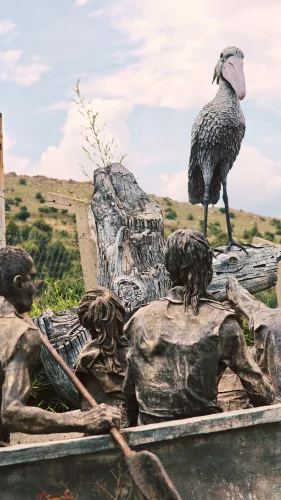
Shoebills face many threats across Africa. The biggest problem is losing their wetland homes when land is drained for farming. People disturbing nests can make adult birds leave, and illegal trade targets their eggs, chicks, and sometimes adults. Fires set to create grazing land also destroy important habitats.
When done responsibly, tourism helps protect shoebills. Money from tours gives local communities reasons to care for wetlands and the birds living there. In Mabamba Bay, people who once hunted shoebills are now dedicated conservationists and guides, showing how tourism can change how people relate to wildlife.
You can help conservation by picking tour operators who follow ethical rules. This means staying a safe distance from birds, keeping groups small, not spending too much time near nests, and avoiding anything that disturbs the birds. The money you spend on tours, park entry, and places to stay goes directly to conservation and local people.
You can also support larger conservation groups that protect shoebill habitats. Research on shoebill numbers, breeding, and habitat needs relies on donations from people who care. Speaking up for wetland protection, in Uganda or around the world, helps make sure these amazing birds survive for future generations.
Making Your Shoebill Dreams Reality
Seeing shoebills in Uganda is a wildlife experience you can't find anywhere else. With easy-to-reach locations, a high chance of spotting the birds, good tourism services, and beautiful scenery, Uganda is the perfect place to meet these amazing birds.
No matter if you visit Mabamba Bay, go on a full safari at Murchison Falls, or combine rhino and shoebill watching at Ziwa, Uganda offers unforgettable moments with one of Africa's most special birds. Waiting patiently to see a shoebill, just like the birds do when hunting, gives you a rare look at ancient behaviors that have stayed the same for thousands of years.
As the sun rises over the papyrus swamps and your canoe moves quietly through the water, seeing a shoebill appear from the morning mist makes every early start worthwhile. These ancient-looking birds, standing still on their huge feet, are a true success story of evolution. Watching them in Uganda's wetlands gives you a deep connection to wild Africa and memories that last long after your trip.
Contact us at to start planning your shoebill adventure